WINTER IN YELLOWSTONE |
|---|
|
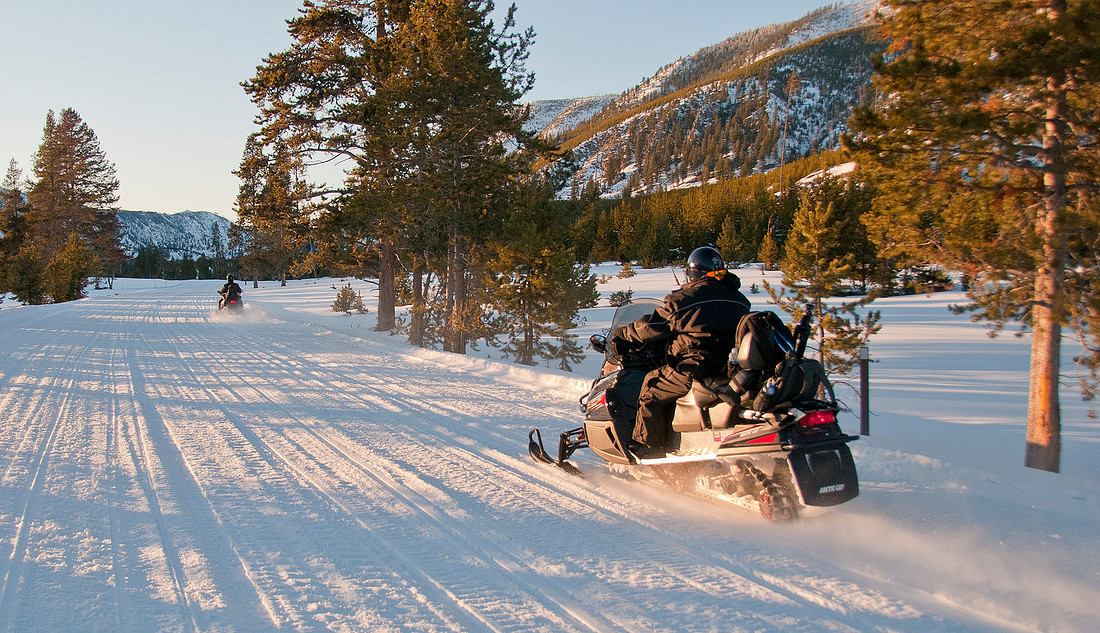
BEING UPDATED 10/2025 If snowmobiling in Yellowstone National Park is NOT on your bucket list, maybe the images in this gallery will encourage you to add it. A winter Yellowstone trip has been on my list for years and I finally got around to it in January of this year (2012). What makes a winter trip special is the fact that no cars, vans, trucks, motorcycles, etc. are allowed in the most popular areas of the park. The only vehicles permitted are snowmobiles or tracked snow coaches and they are limited to the groomed roads. You can ride for hours and see few other people. Your travel is through vast expanses of snow covered landscape unscarred except by occasional animal tracks.
This trip was organized by my friend Ken Weaver (www.kenzlenz.com). When we made our first trip, park regulations required visitors to travel with a certified Yellowstone guide. Ken and I felt lucky that we got Matt Henry to show us around, and keep us out of trouble. Believe me, there are a lot of ways to get into trouble! We travelled to Yellowstone with visions of finding packs of wolves roaming the hills, giant bull elk bugling in the canyons and maybe even a bear that couldn't sleep. Even old men still have fantasies!
And this critter must have been reeaaally hungry.
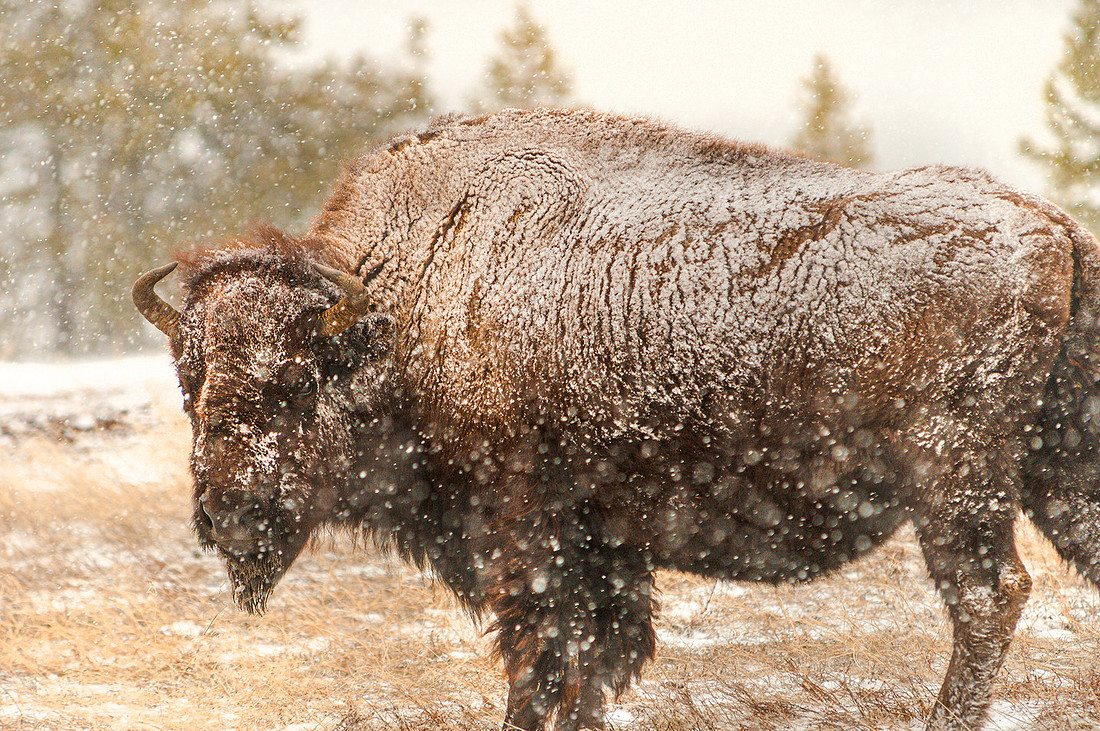
Shortly after the snowstorm got really rolling, we came across another small group of bison feeding close to the road. This experience taught me a major lesson in winter photography. If it is snowing, you should abandon autofocus and flash. All those moving snowflakes confuse the hell out of autofocus and become brightly glowing, out-of-focus blobs.
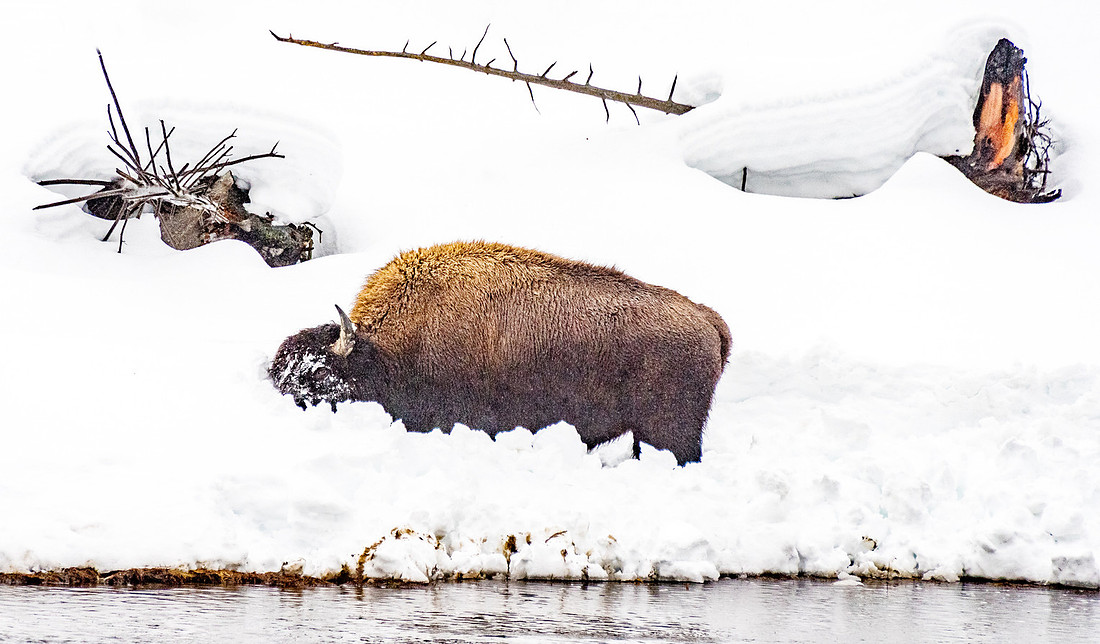
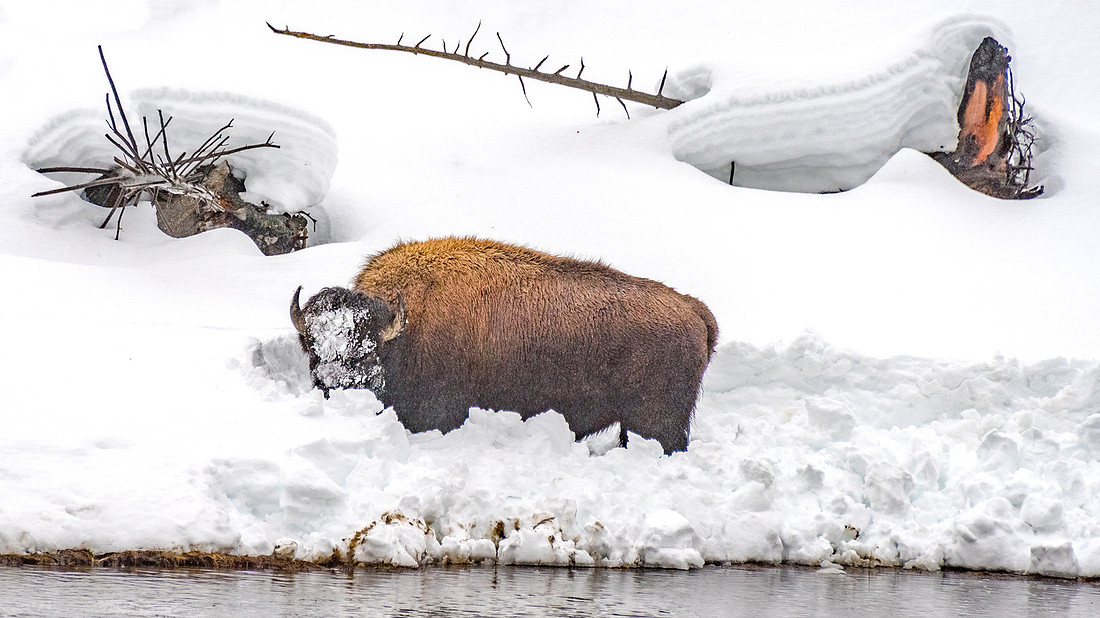
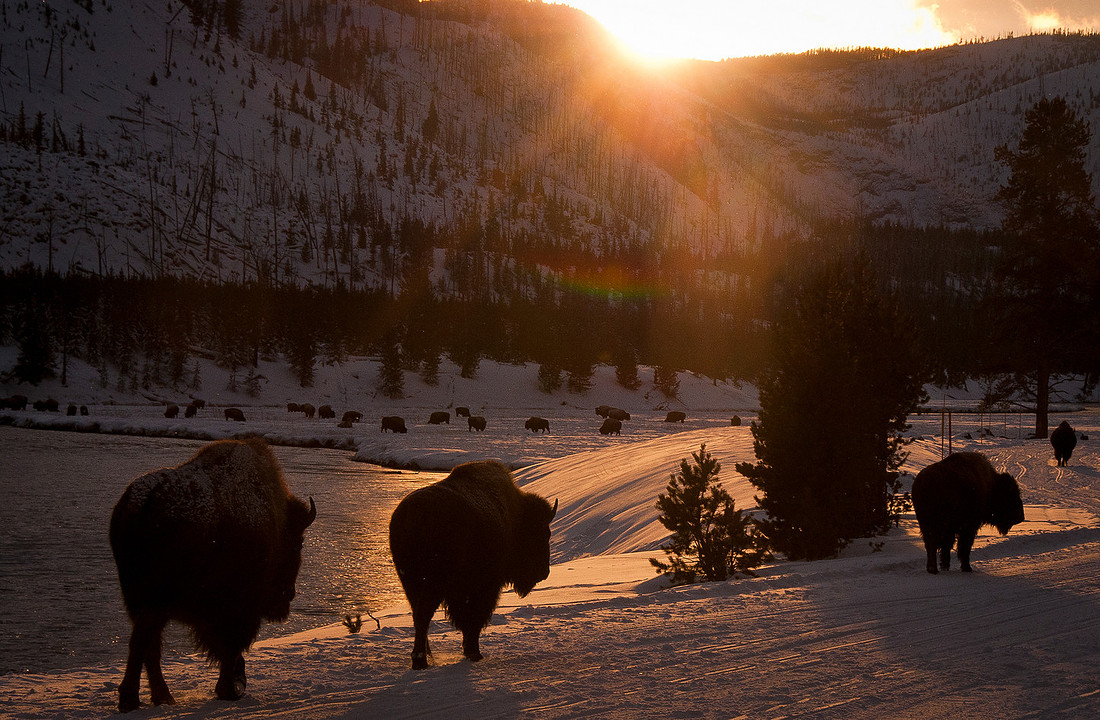
As we headed back out of the park at the end of the day, the storm passed and the clouds started breaking up. We encountered a herd of bison that had moved to the edge of the "warm" Madison River just as the sun was setting behind the canyon walls, which meant another cold night was immenent.
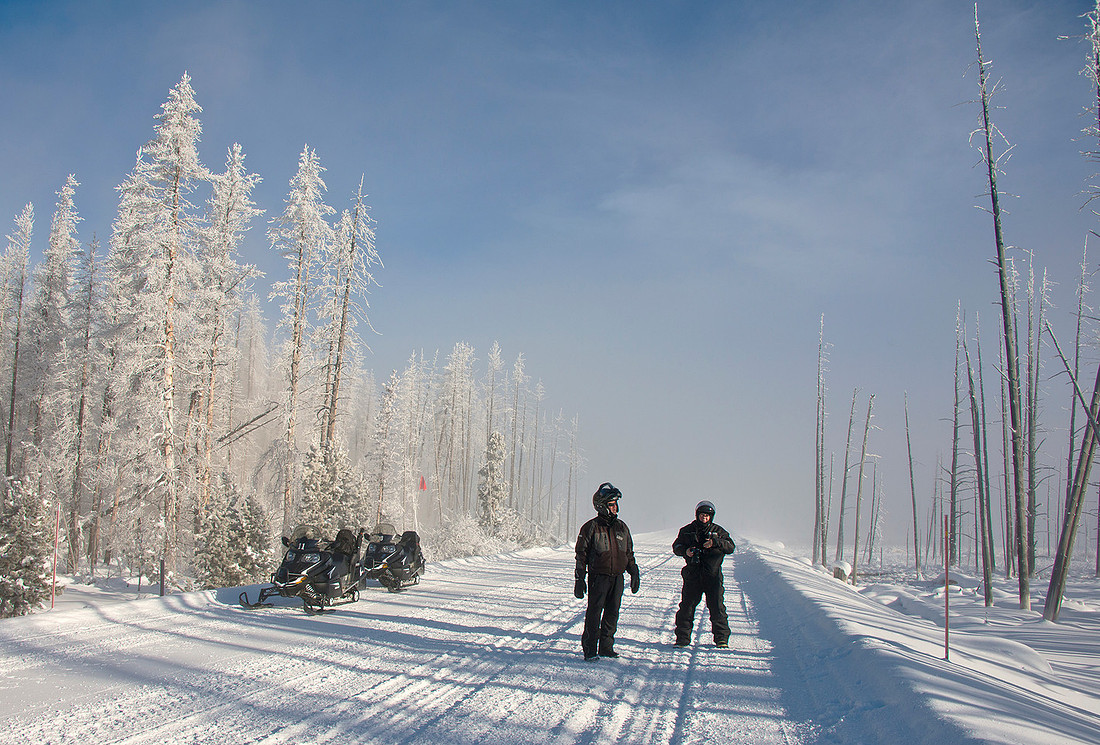
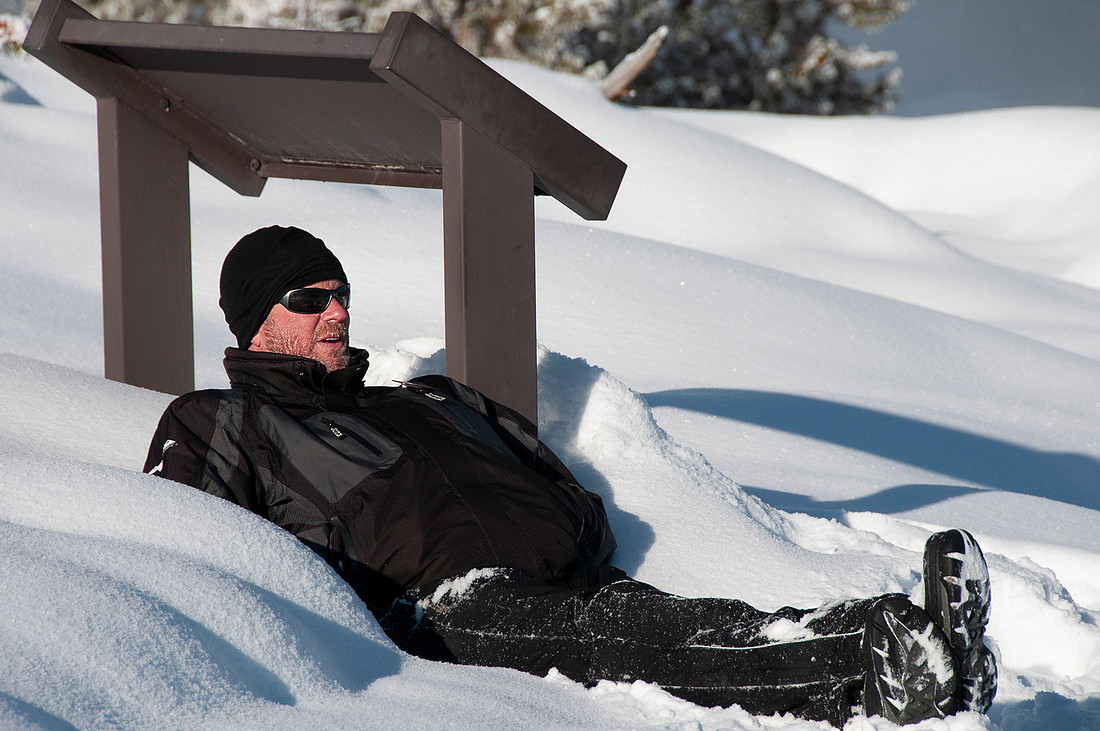
Park rules firmly state that snowmobilers are not allowed to enter until the temperature warms up to a minimum of -20 degrees. When we left our West Yellowstone, Montana base the second morning, we were basking in a very warm temperature of 16 degrees BELOW ZERO! Our guide, Matt Henry, wisely stopped only 5 miles into the park for a safety check. That stop may have saved the day because Ken's helmet had a very small leak, and his right eyebrow was already caked with frost and nearly frozen. The riding gear supplied by the snowmobile outfitter is very effective, even in extremely cold conditions (Like sitting in a snowdrift as Matt is doing below). But, if you leave even the smallest gap in coverage, body parts will freeze up quickly while riding an open snowmobile at 45 miles per hour. We had to zip our cameras inside our snowsuits to keep them from freezing up when we weren't shooting.
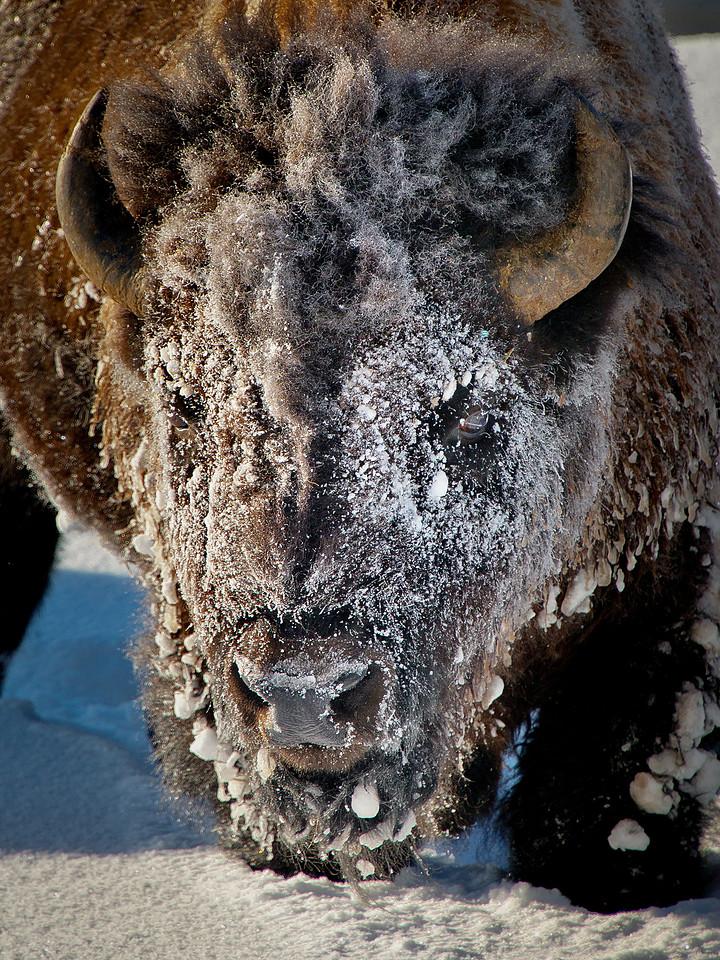
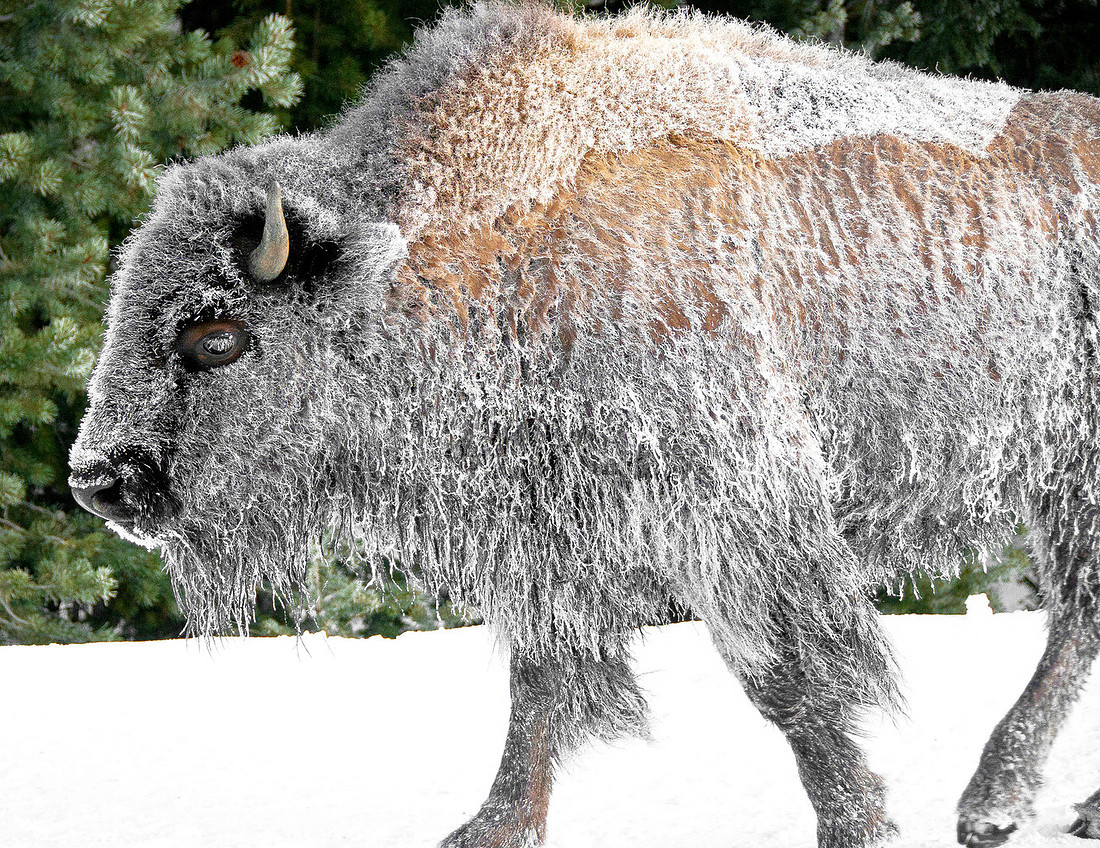
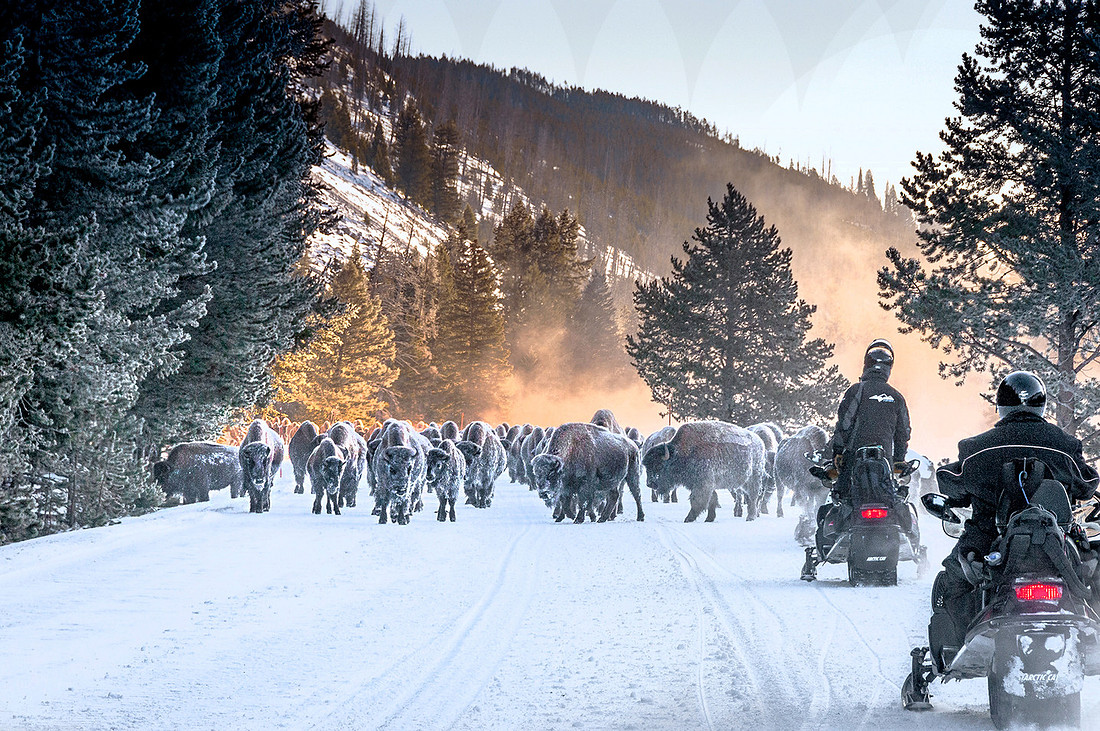
Far be it from me to suggest that Matt, or any other guide, might tell stories to make their customers feel as if their trip was totally unique. But, very early the second day we were scooting down the road along the Madison River when we encountered what Matt said was a totally unusual bison experience. The prior night had been desperately cold, possibly as low as 30 degrees below zero. A large herd of bison had gathered around some of the Yellowstone thermal features for warmth from the venting steam (not unusual). The steam condensed on their fur (though strangely not on their horns) and then turned to ice (also not unusual). These animals must have gained about 20 pounds each just from all the icicles hanging on them.
What was unusual is that this herd of two to three hundred bison ice sculptures had taken over the road and was moving to a new feeding area. The road was completely blocked by this lumbering furry glacier. We pulled our snowmobiles to the side and kept them between us and the bison. You could see the anxious looks in the eyes of the creatures as they passed close by, often breaking into a mild gallop to get past us quickly. There seemed little chance of one attacking us, but if they got spooked, their sheer size would render the snowmobiles useless as a line of defense.
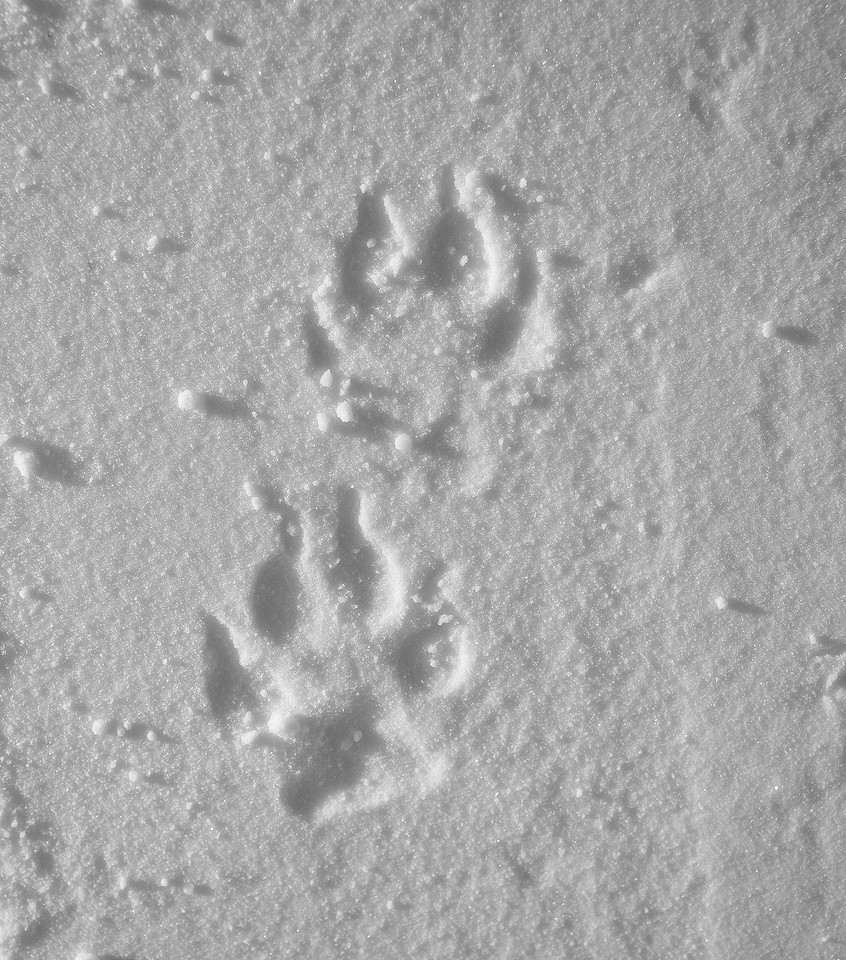
Our "Holy Grail" for this trip would have been any type of encounter with wolves, so we went looking for them. And looking for them. And ..... you know. In our short visit we went to all the places where wolves were spotted "yesterday" and followed wolf tracks on the road for over 10 miles before they disapeared into the forest.
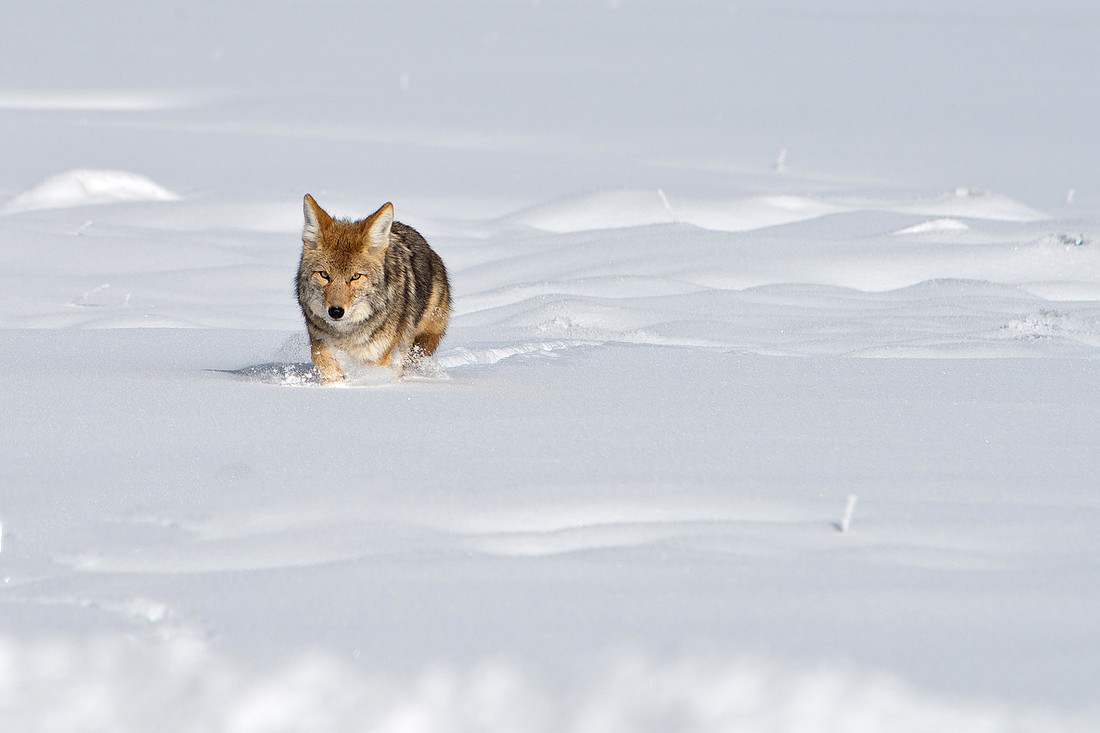
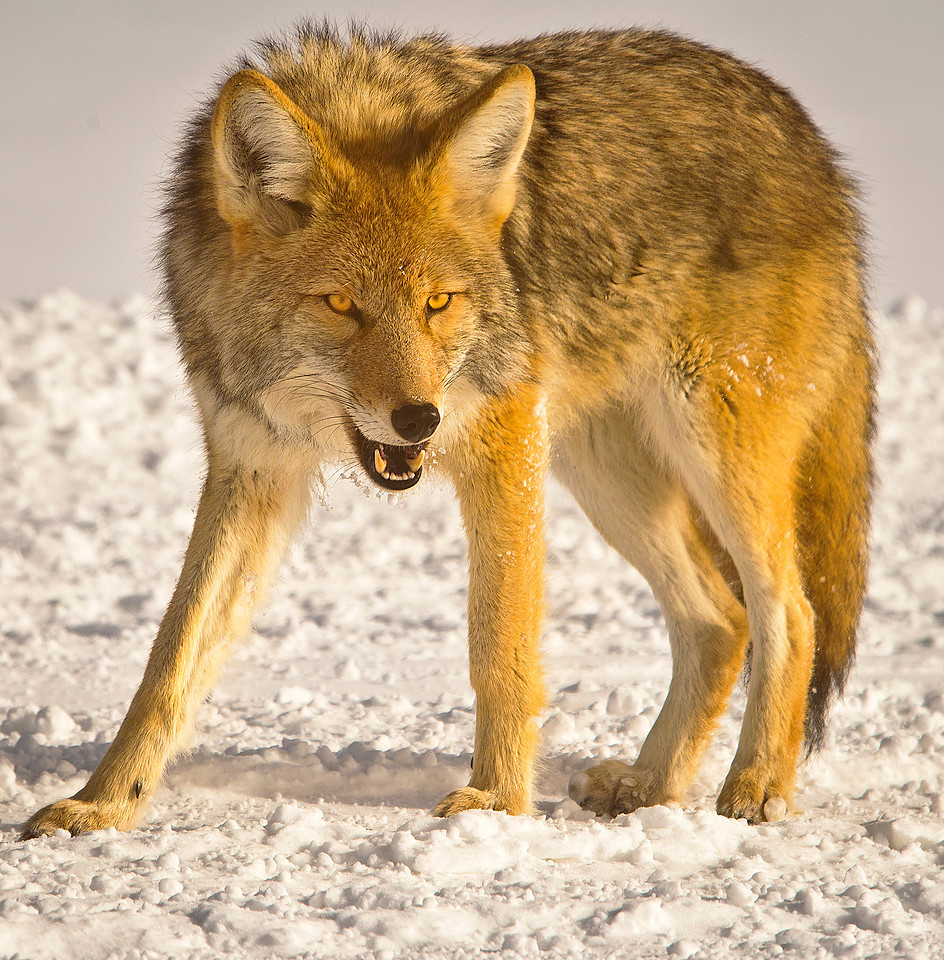
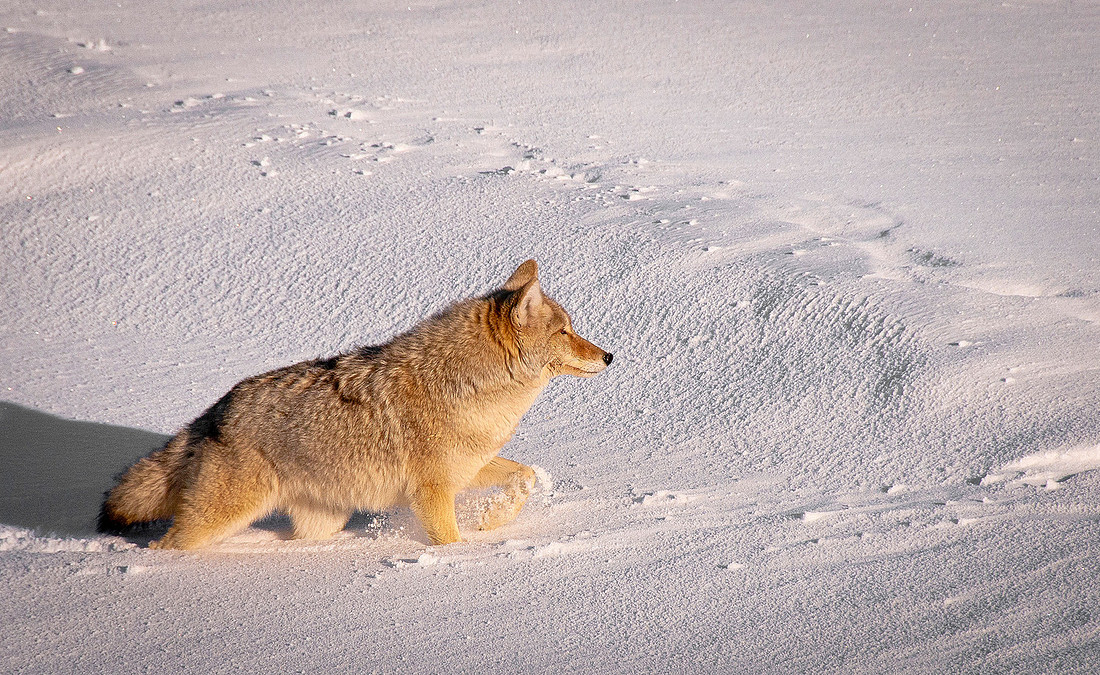
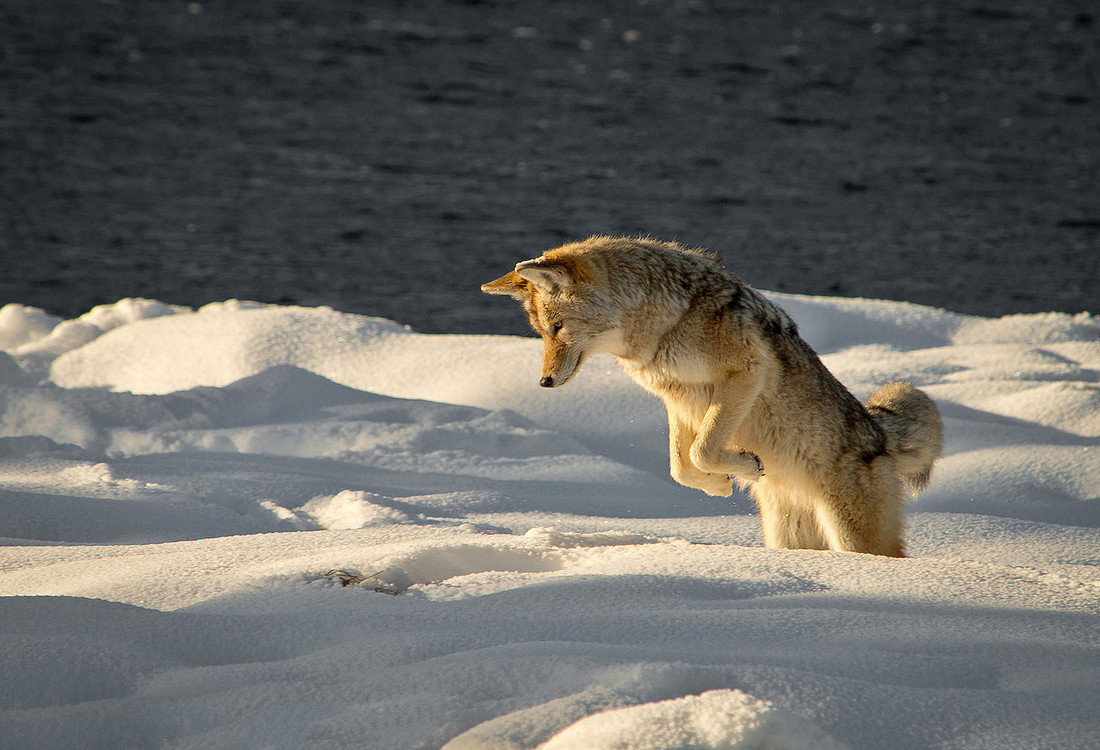
The second was a beautiful animal with a full thick coat of fur. Both coyotes seemed to consider our intrusion on their daily activities as a minor inconvenience and were clearly not threatened by our presence.
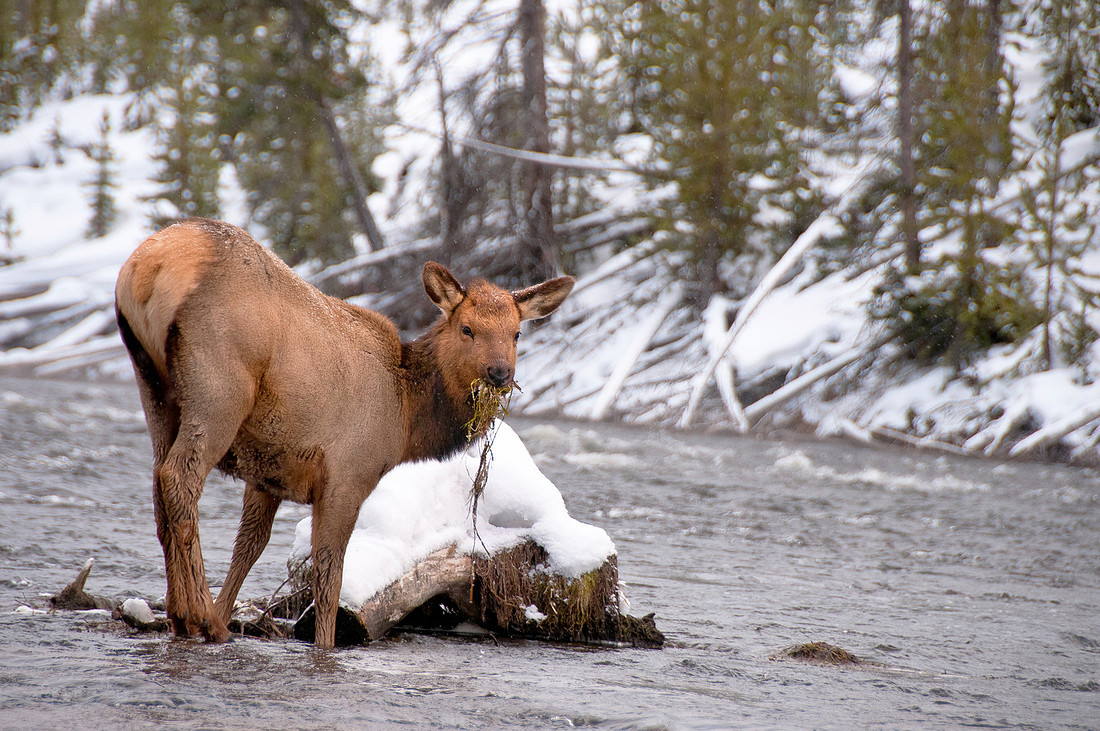
We spotted a number of cow and calf elk, but most stayed far from the roads and were very difficult to photograph. The one unique elk sighting we enjoyed was a cow feeding on vegetation in the Madison River. Our guide, Matt, explained that elk very rarely eat vegetation in any river, let alone the Madison. Because of all the thermal features in the park, the water in the rivers, especially the Madison, have very high levels of arsenic and other chemicals. The plants in the river have adapted to this chemical cocktail, but only a percentage of the elk in the Madison herd are able to eat these plants. The elk that can stomach the chemical laced grass seemed to enjoy standing in the warm (relative term) river on a cold day to enjoy the buffet.
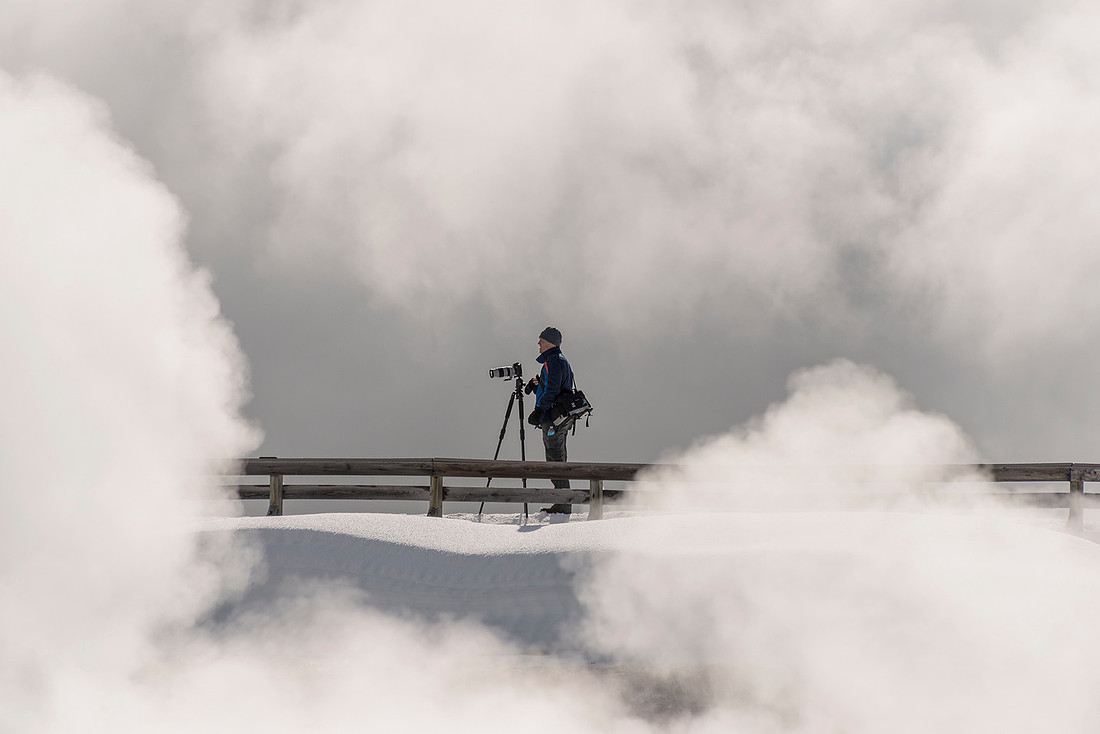
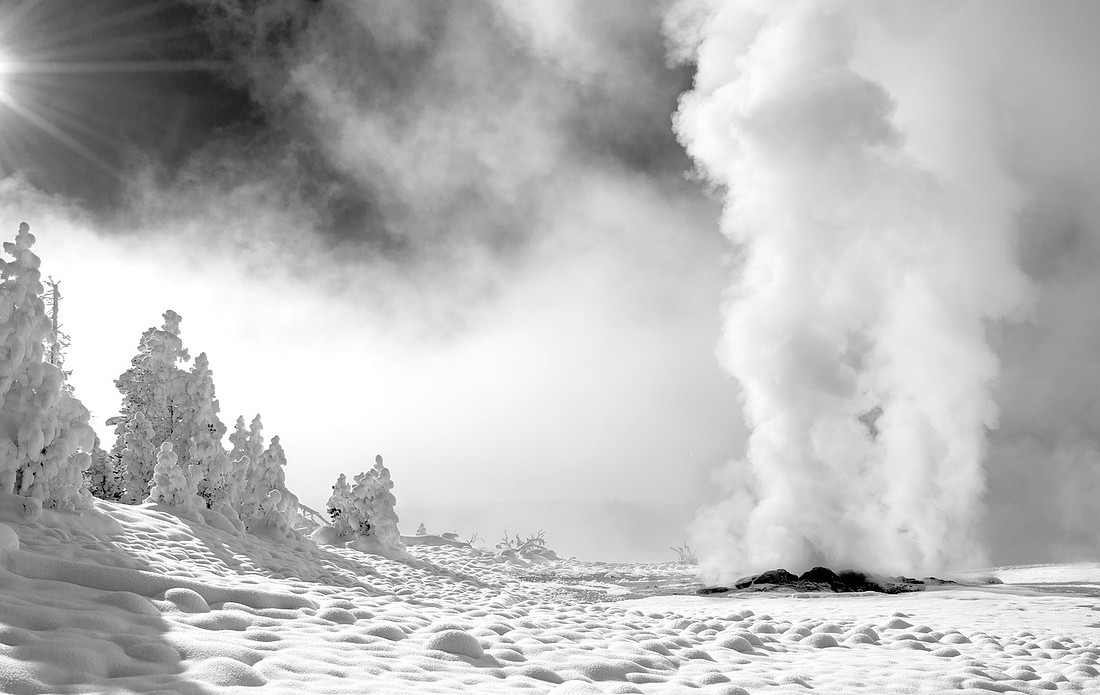
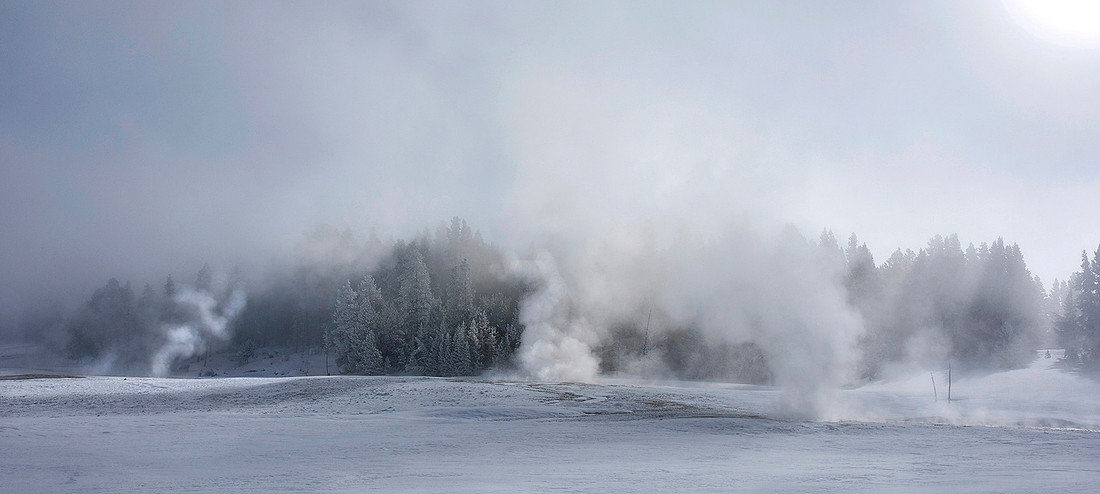
In addition to seeing many of the hardy creatures that stay in the park all winter, we did get to see some of the amazing scenery and thermal features Yellowstone is famous for. We were focused on wildlife, and tried to not be distracted by the scenery, but it is simply impossible to ignore. The very cold weather accentuates the amount of steam escaping from the thermal pits, so there are great clouds of vapor.
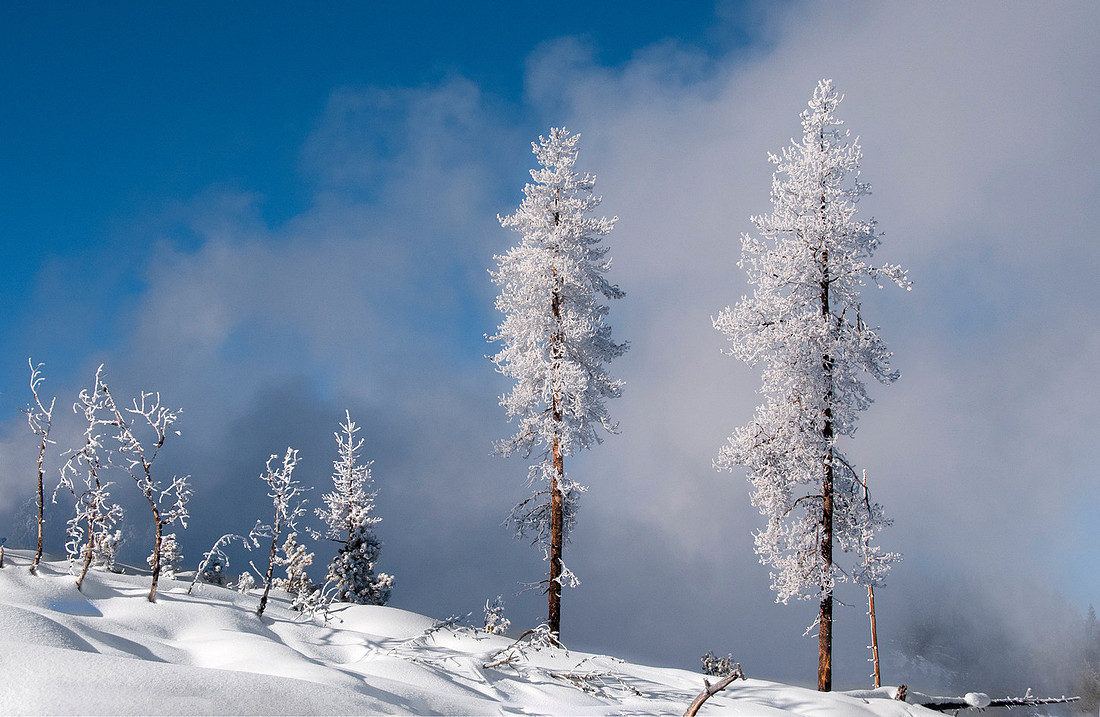
As it did on the bison, the moist steam condenses on nearby trees and plants and turns them into white flocked sculptures.
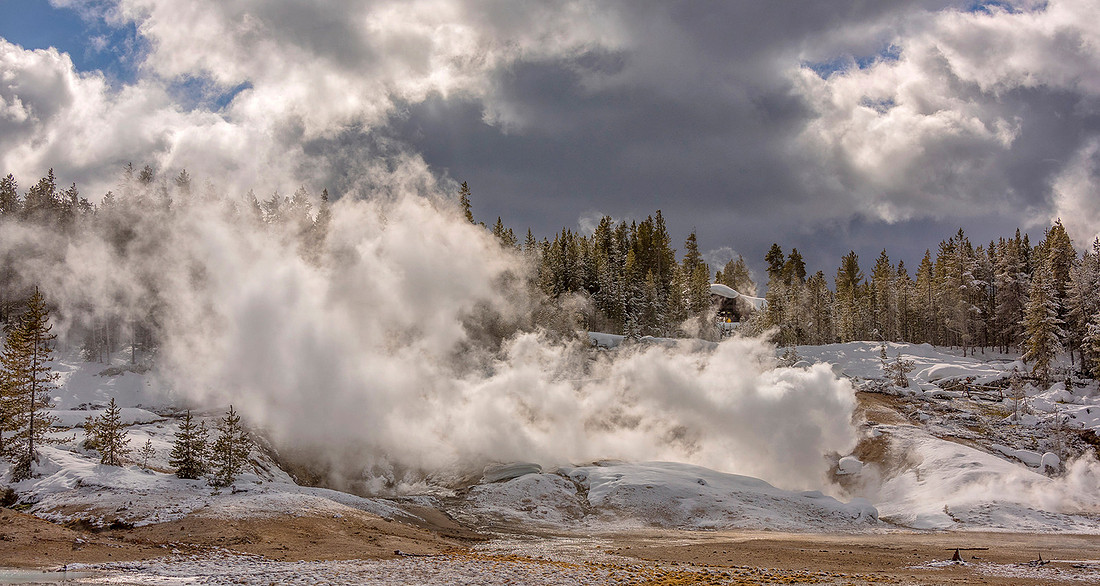
Check out the amount of snow on the building at the top of the photo below.
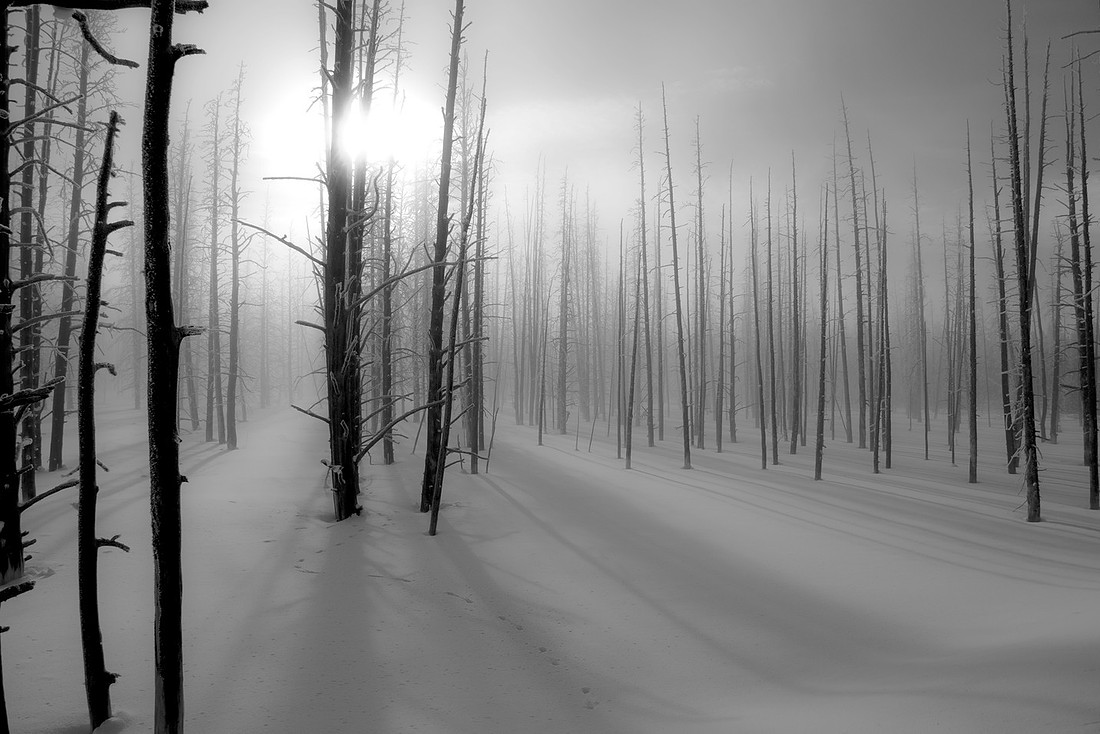
Even the very stark parts of the fire-scarred park have an eerie beauty when covered with snow.
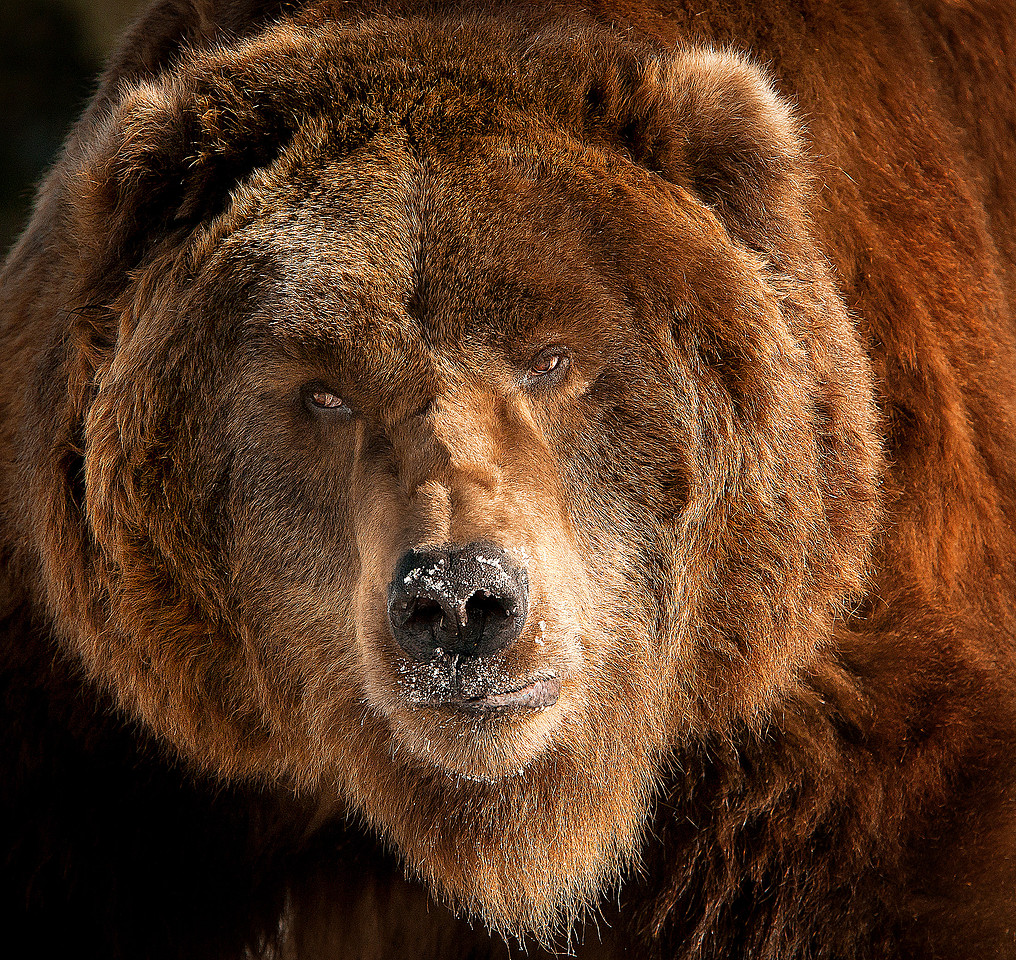
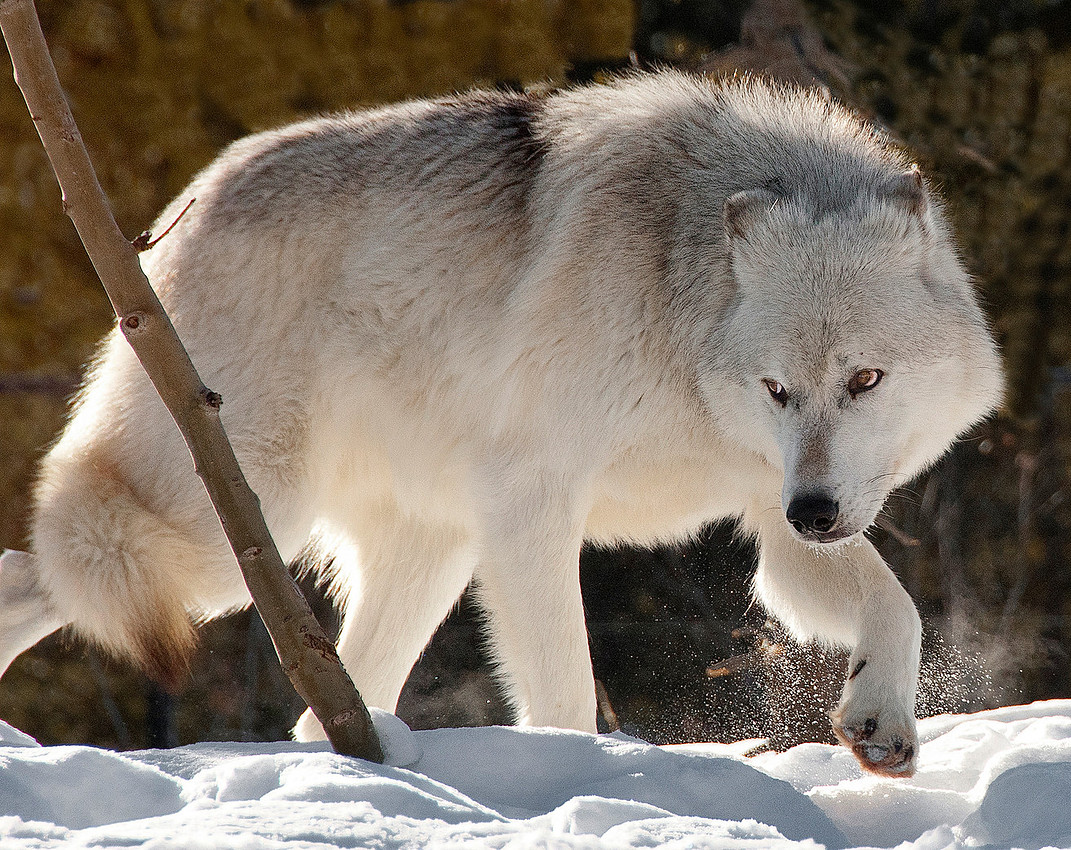
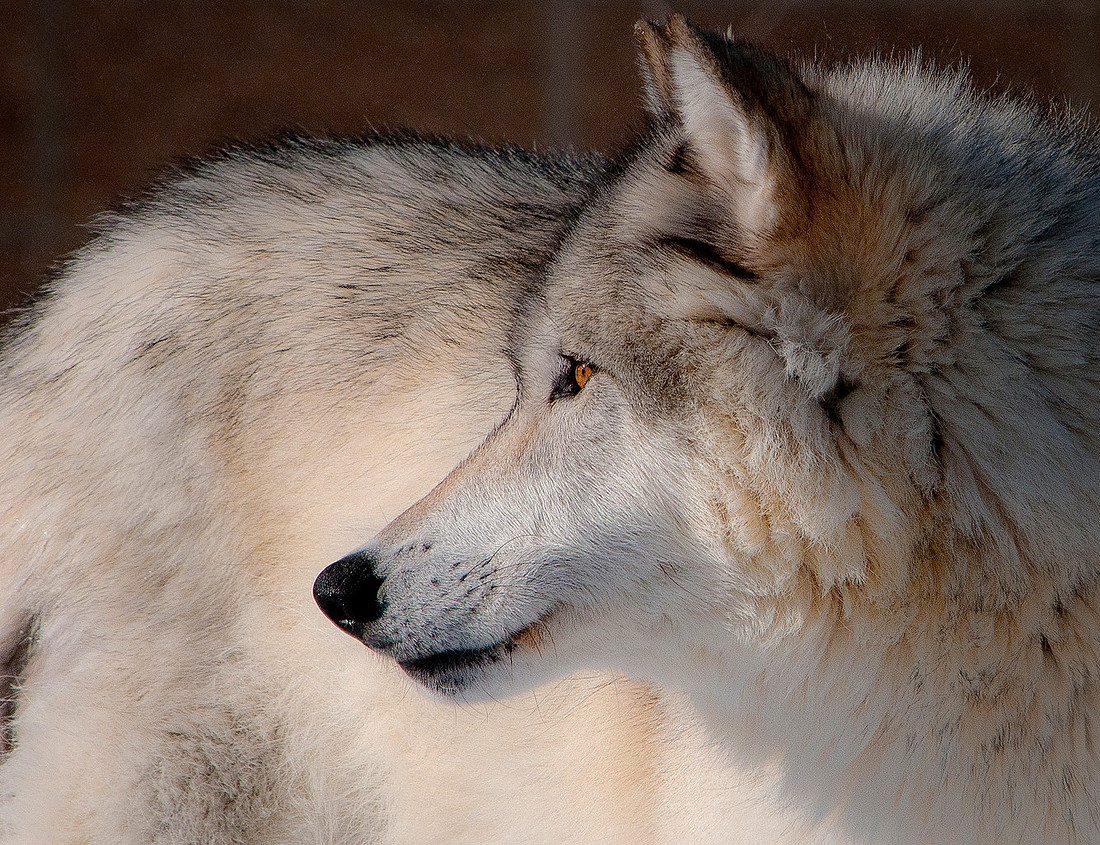
Before we left for home on our third day in West Yellowstone, Ken and I visited the Grizzly and Wolf Discovery Center. The center is a sanctuary of last resort for bears and wolves that would otherwise be euthanized. The exhibits are very interesting and the non-profit center has plans for expansion. When we visited, all the bears spent most of their time in private pens. They were released into an excercise yard one-at-a-time, for about an hour at a time. Caretakers at the facility would go into the excercise yard between bear visits and place food in semi-hidden locations. The bears could get a bit of excercise locating the food and moving logs, or other heavy obstacles, to get at it.
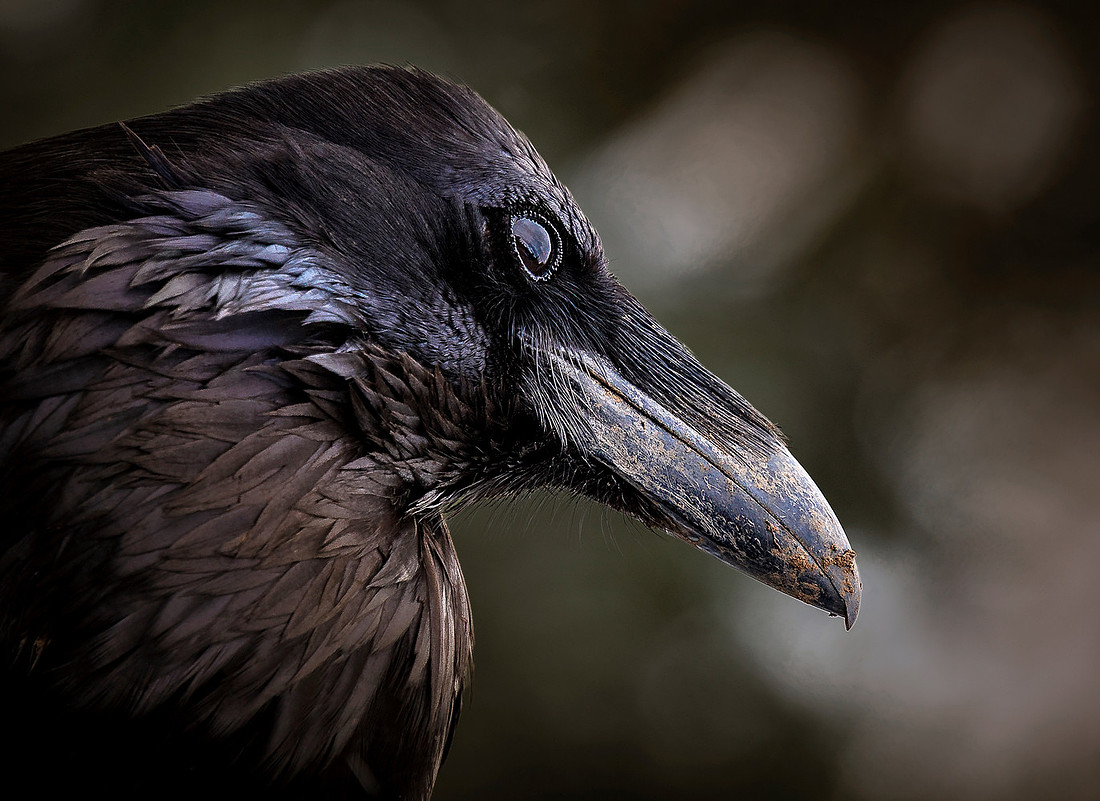
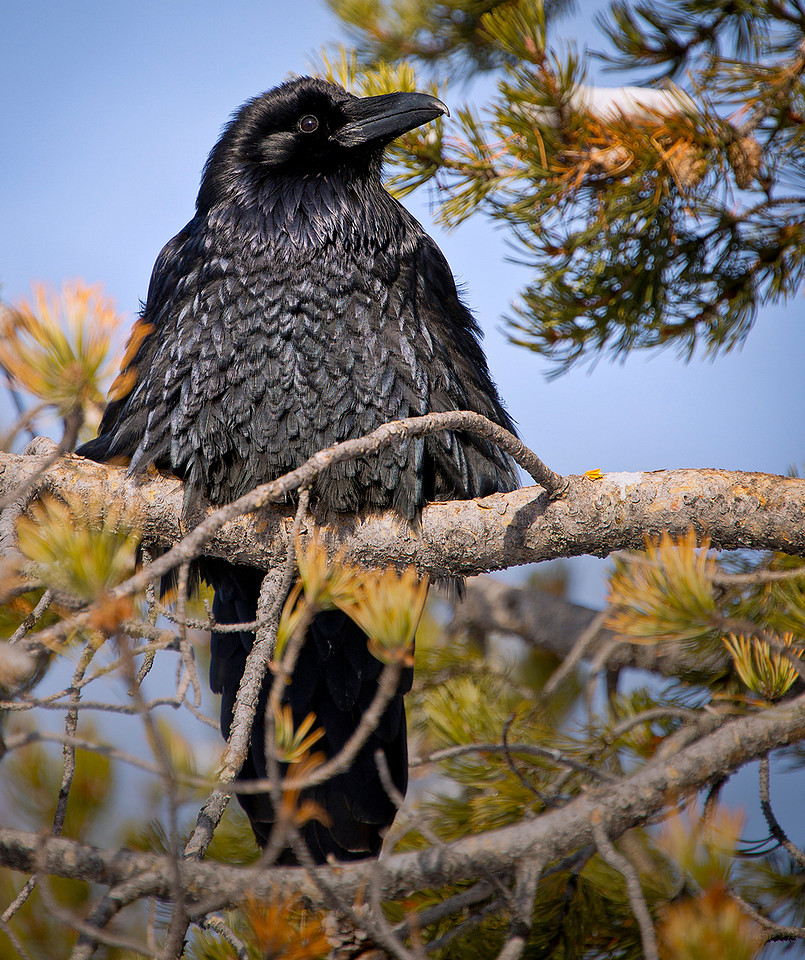
Hiding the food served multiple purposes. Feeding and excercising the bears was primary, but trying to keep all the food from being stolen by Ravens was the necessary part. If you have spent much time on this site you know that I like to photograph birds. I found the Ravens of Yellowstone to be fascinating and I would be willing to go back, just to do a photo study on them. They are very intelligent and love to take advantage of the innocence of the many visitors to the park each year. The Ravens have learned how to unzip unattended backpacks or purses and steal the contents. Some even close the zippers to hide the thefts
It was easy to get close-up images of these beautiful, but elusive, animals.
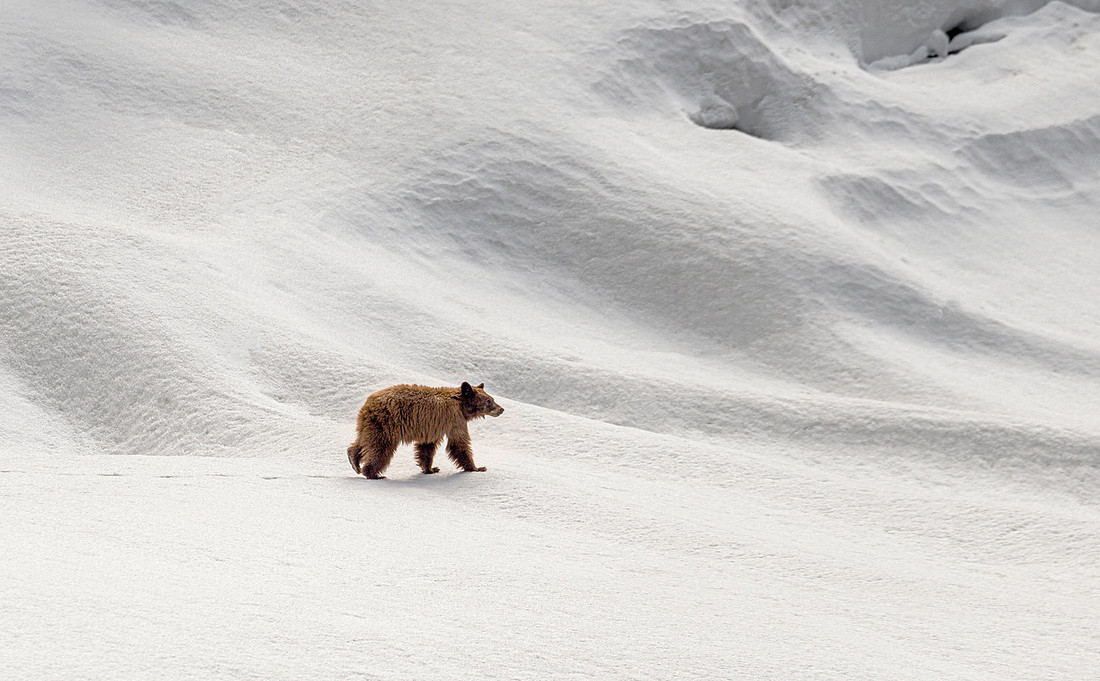
So, what did we learn from this trip? We learned grizzly bears have no trouble sleeping, and once mating season is over, bull elk head for high country and leave all the girls behind (just like a man!!).
THEN WHAT HAPPENED??
2025 UPDATE This story was originally written in 2012, after my first snowmobile adventure in Yellowstone. I was hooked! I went back at least 10 more times in following years. A couple times snowmobiling with a friend or snow-coaching with 10 friends. Several times it was just my guide, Matt, and I in my JEEP. I took thousands of images on those trips and have boiled them down into a collection of unique galleries you can visit in the " Greater Yellowstone Ecosystem". I have my only XXX Rated gallery, that was shot in Grand Teton National Park, located there. This story and the galleries and photos in the Greater Yellowstone Ecosystem were updated in late 2025, and more will be added. If you have the time, check out how much MORE there was to be found in Yellowstone. Spoiler: I did finally see wolves ... and a Bobcat, and the bears woke up .... and Pronghorns, Big Horn Sheep, Mountain Goats, Red Dog Bison, Trumpeter Swans and so much scenery!
|