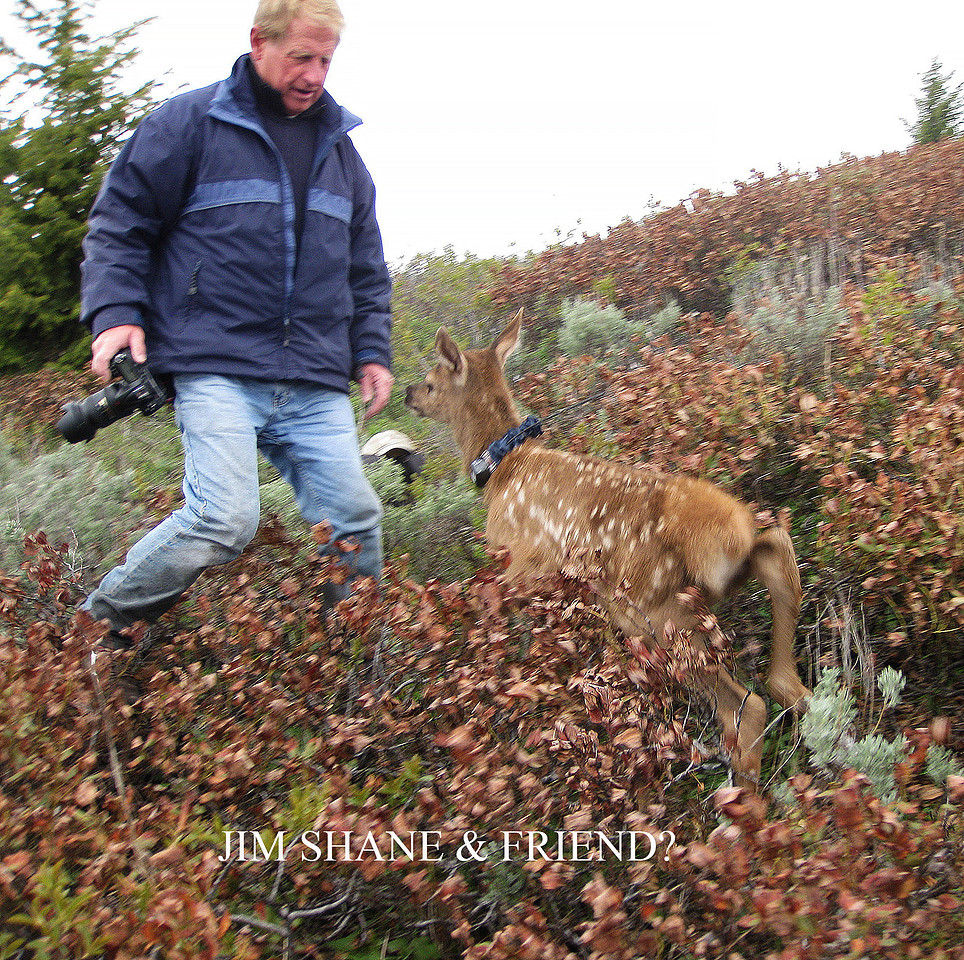
So, why was I in Kilgore Idaho?
Idaho is a classic "Great Outdoors" state. There are, literally, millions of acres of mountains, rivers and forests. That sounds like a great place for a wildlife photographer, right? But looking for wildlife that doesn't want to be found, in all that Great Outdoors, can be a challenge. So, when I saw a news item that advised me that the Idaho Fish and Wildlife Foundation was auctioning off ride-alongs with members of the Idaho Fish and Game Department, I was on it. The list of auction ride-alongs included such rare opportunities as a trip to locate and count wild wolf pups, or a horseback ride to stock remote mountain lakes with trout. The thought of being able to travel into remote woodlands with these experienced professionals struck me as an ideal opportunity for unique photo ops. My choice was the elk calf capture project. The description of the trip included warnings about possible encounters with wolves, mountain lions, black bear and grizzlies. Cool! To go on the trip I was required to certify that I was healthy enough to trek through mountainous terrain and I had to sign a waiver releasing the fish and game guys from any responsibility if one of those predators caught me before it caught one of them. Sounded just right!
I was told to meet the elk hunting team at the project base camp in the town of Kilgore, Idaho. Where is that? MapQuest directions stated that the town was 29 miles east of DuBois, Idaho. OK, where is that? I got the idea of how remote these places are while driving the 50 miles of interstate from Idaho Falls to Dubois. The view through the windshield was almost exclusively untouched terrain except for occassional farm fields. The Dubois exit from the interstate solidified the feeling of "remote". I learned Dubois became populated because there was a need for workers at the U.S. Sheep Experiment Station that is 3 miles north of town. What kind of experiments does our government do on, or with, sheep? And why do they need to hide it in such a remote location? I didn't pursue the question. Then, after 30 more miles on a road that was the only sign of human habitation, I was encouraged to find the Kilgore store, but no town. I may be one of the few men willing to stop and ask for directions, so I went inside.
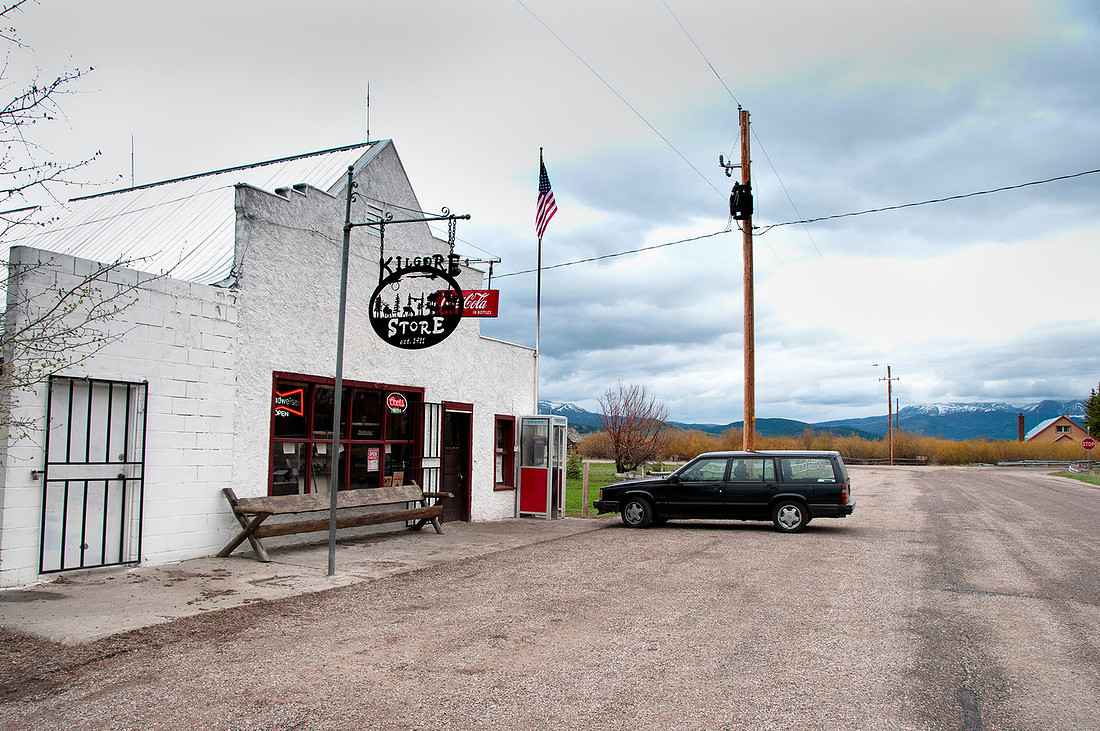

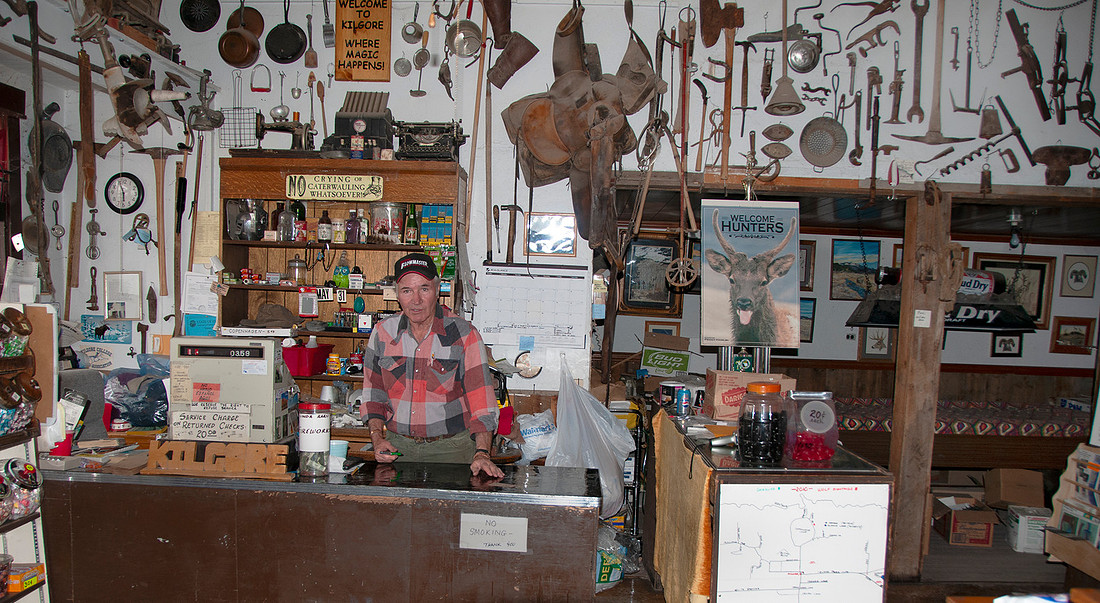
The store is one small room, crowded with more artifacts of local history than merchandise. I asked the man behind the cash register where to find the town of Kilgore. His reply, “This is the town!”
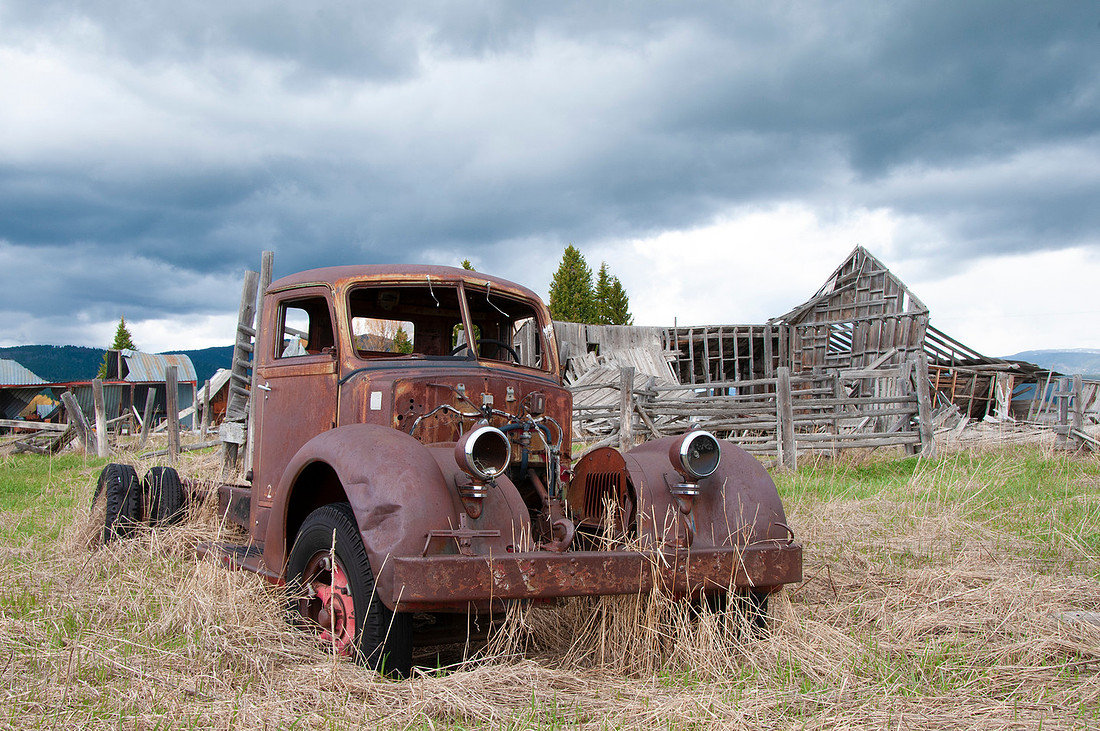
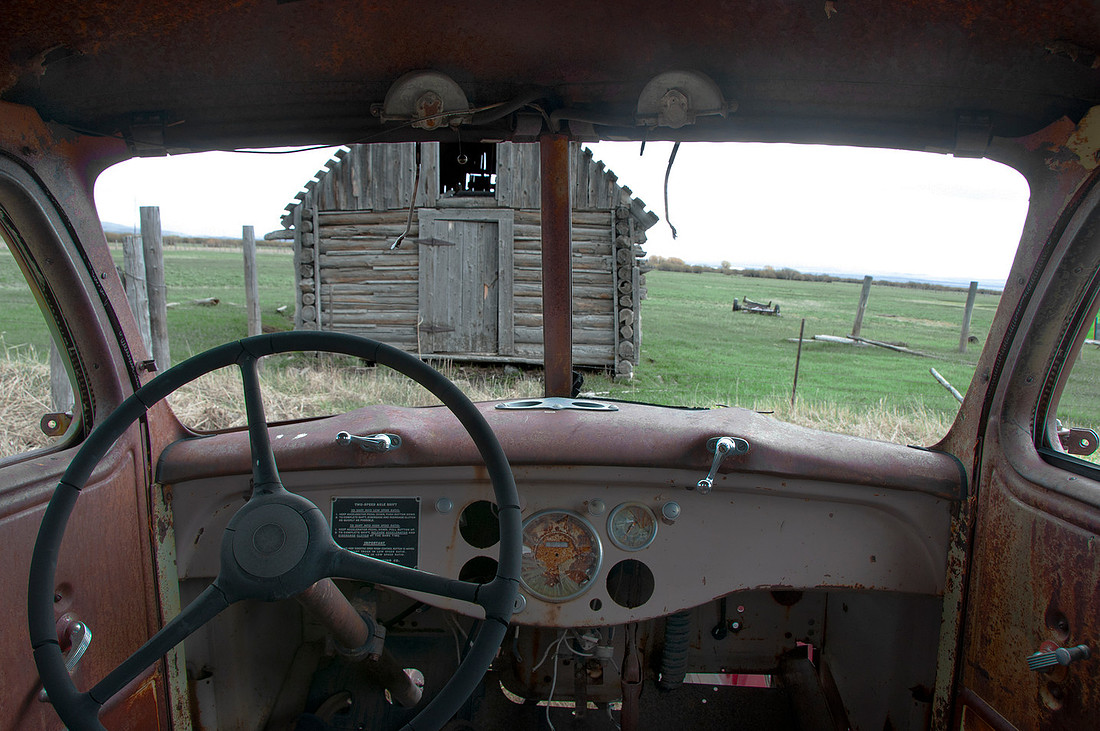
 In addition to the store, there are two occupied houses, a few rustic rental cabins for overnighters and a building that looked like a large two car garage. That’s Kilgore. No gas station. No Mcdonald's. If you didn’t fill up in DuBois you’re out of luck. The road from Dubois to Kilgore was asphalt, but turns to gravel before you get to the abandoned farm half a mile away. I asked about the fish and game folks and was directed to what I thought was a two car garage. It was actually a US Forest Service workstation mainly used as a camp for fire fighters during the dry season. It was currently unoccupied, and closed. The Idaho Fish and Game camp was using a muddy field behind the workstation for their tent village. It was the end of a cold and rainy day so I gravitated toward wisps of smoke coming from a chimney in one of the larger tents. The stove was in what appeared to be an empty cook tent and was producing more smoke than heat. The cook tent, like the rest of the camp, was deserted. I chose to kill time wandering in the fields near the camp and found some abandoned evidence of prior Kilgore occupants. Clearly, they had been gone a long time.
 Michelle was the first biologist to show up. Like me, she came to Kilgore to join the hunt the next day. Michelle is a slight young woman with a studious appearance that fit my image of a person who would dedicate their life to studying wildlife. I admit to the chauvinism of surprise when she told me she hunts large game every year to help keep her home freezer stocked with meat. This petite looking young woman tracks ‘em, shoots ‘em and packs them back out of the wilderness to feed the family. Little did I know, as we sat in the cook tent, that I would be counting on her ability to handle a 12 gauge shotgun when I would join her on a "mort" search in less than 48 hours. Michelle started filling me in on the purpose of this project. Kilgore is considered a gateway to the Caribou - Targhee National Forest and located very close to the Montana border. The area is known for a large local elk population and is very popular with hunters. Because portions of the elk herd spend time in both states, the Idaho Department of Fish and Game had many reasons to know when the elk were where. The project was under the supervision of wildlife population biologists. Population biologists need to know how many of each game species is in a given area, along with information on the birth and death rates of populations, to effectively manage hunter harvests. Their goal is to provide hunters abundant opportunity while ensuring the long term survival of the wildlife populations. They decided the best way to find out was to put tracking collars on as many of the elk as possible. Michelle explained that the project was only designed to collar baby elk. The younger the better. Less than 24 hours old would be best. The goal was to track the calves to learn when they lived in Idaho and when they lived in Montana. The crew was searching in the Kilgore area because it is noted to be a major elk maternity ward for the bi-state herd. Michelle and I were joining the 3 week effort that was already in progress.
It was well past dark before the search teams started straggling back to camp. Soon the cook tent became the center for a show-and-tell for stories of the days hunt. The most important stories were about elk calf captures and cow elk sightings, but this had not been a very productive day. One team had found the remains of a calf that had been lunch for an unknown predator. The team all went out to look into the bed of a pickup where the hooves and leg bones were all that was left. My first sight of the remains was startling and made me aware of the fight for survival that goes on, even in this beautiful natural setting. I learned that predators prevent some of these calves from living to be a week old.
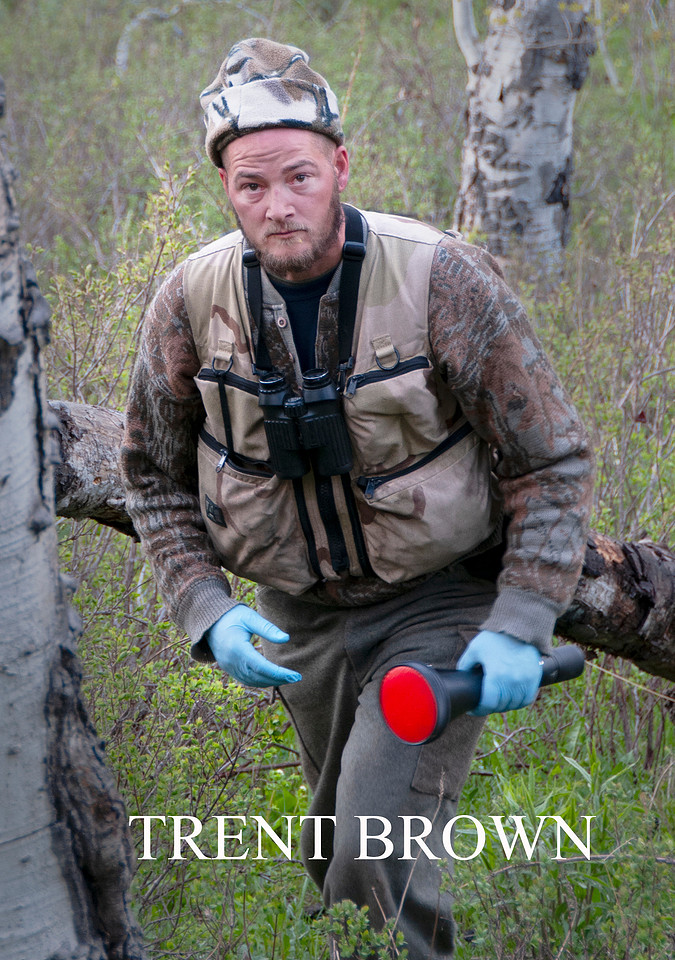
“I saw the biggest moose I have ever seen. He had a rack as big as a Volkswagen” blurted Ian, as the crew returned to fireside stories in the tent. “We saw three wolves down at Sheridan flat” (Trent had photos for the show and tell session). I was a bit amazed at the enthusiasm for wildlife these biologists shared even after a long, cold, wet day with little success. I would soon learn that these biologists are 100% involved in their jobs. They work with wildlife management projects everyday, and hunt and fish when they aren’t working. They are campers/hikers/hunters and fishermen. “We saw 125 cow elk the first night we were here” project leader Shane Roberts told me. The crew was enthusiastic about their potential for success. The goal of the project was 50 collared calves. When I got to camp they had already tallied 21 animals but the tally of active collars could go up or down on any given day based on who got more calves, biologists or predators.
“Butts in the seats at 5 AM.” Shane reminded as the team headed for their tents.
What can you see at 5 AM?! I wondered!
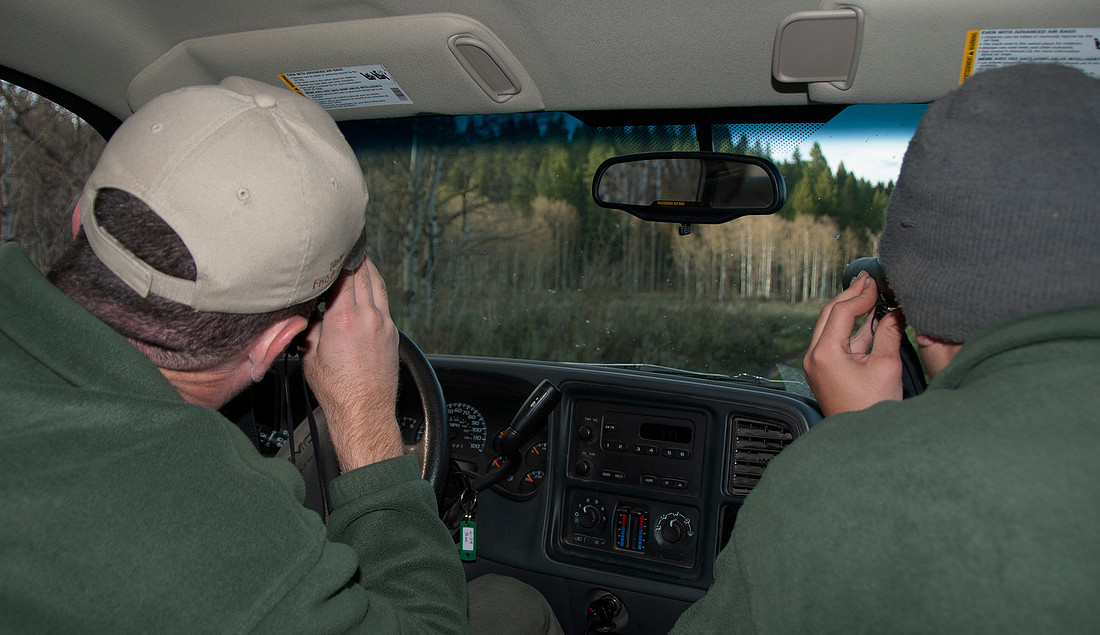
I rode with Shane and Ian the first day. Our first cow sighting was at 5:15 AM. The sound of our truck tires scrunching down the gravel road in the pre-dawn light had startled the cow into action. It was binoculars up as both Shane and Ian watched the cow for signs she was hiding a calf. Typically a startled elk will simply trot off into the wilderness. A cow with a calf nearby will stop and watch the intruder and occasionally glance in the direction of the calf’s hiding place. This cow stopped and kept an eye on us. “Do you have your pepper spray?” Shane asked before we started our first search mission. He made it clear that we weren’t the only ones looking for the calves. We were in the wilderness just beyond the edge of civilization, home to wolves, mountain lions and both black and grizzly bear. The department of fish and game has regular training sessions to teach staff members how to deal with large animals. These biologists universally agreed that bear are the major threat. The biologists are regularly out in the wilderness with little more for protection than industrial strength pepper spray and their wits. My lack of such training was probably one of the reasons I was required to sign a waiver before I was allowed to go on this hunt.
We started a systematic search, but after nearly an hour of combing the scrub brush we gave up. If there was a calf here, it was very well hidden. Such was the pattern of the first morning. The four wheel drive would take us into remote areas on 2-track roads few humans ever travel. If we spotted a cow we would search the area. We got skunked. But after a morning of searching, I clearly understood the problem. Little tiny needles hidden in a really large haystack. Can you see any elk calves in this photo?
There is no "favorite" type of hiding place. Behind a log. In a vast field of brush. Behind a group of trees. This is (sort of) what the hunters were looking for. AKA the needle.
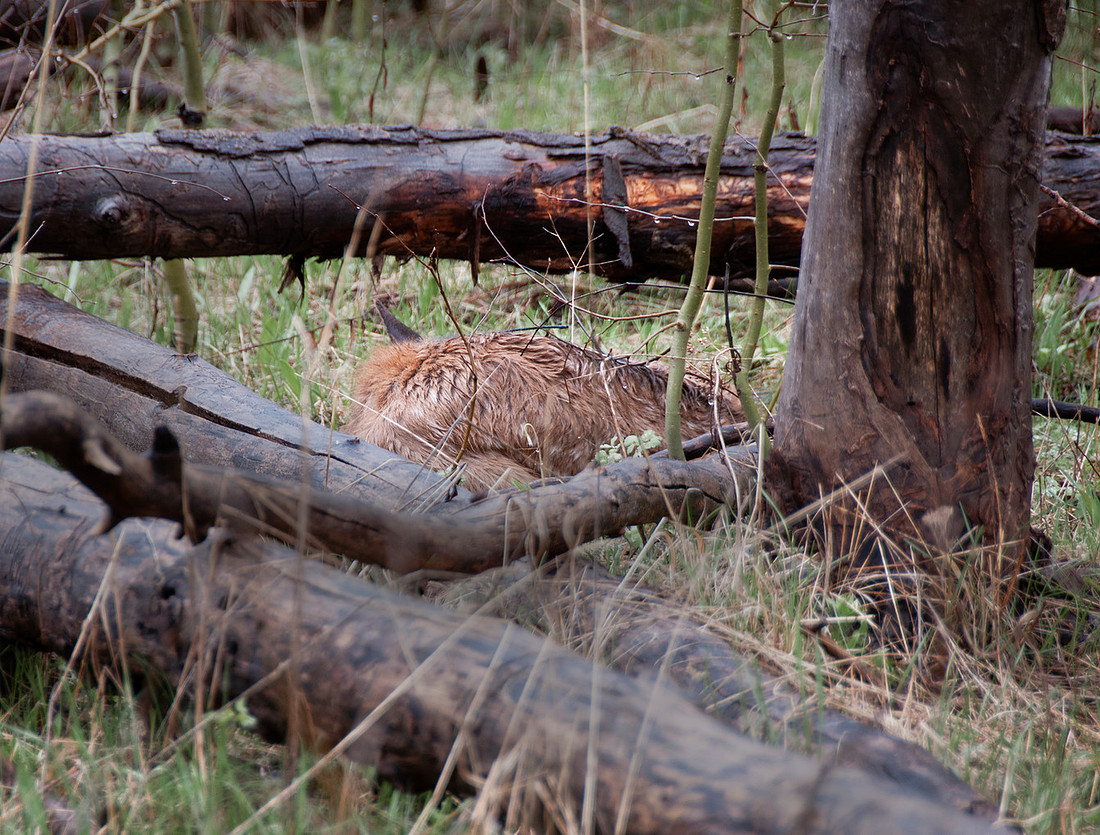
Here are versions of the haystack.
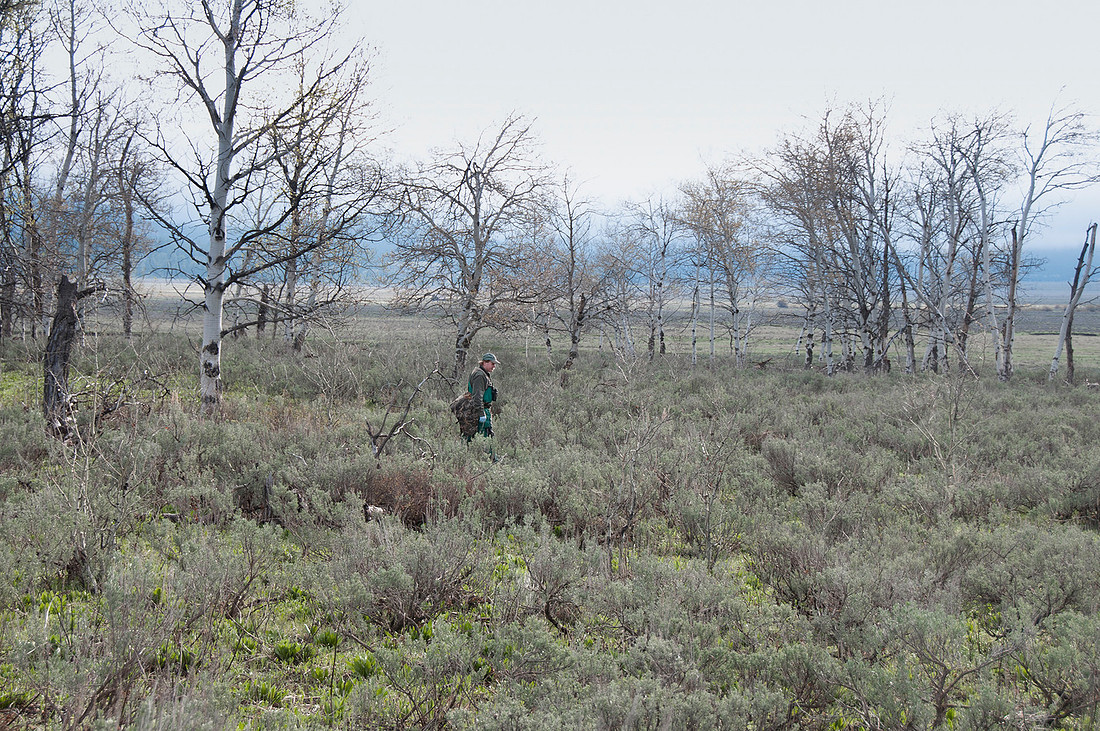 Could be under any bush,
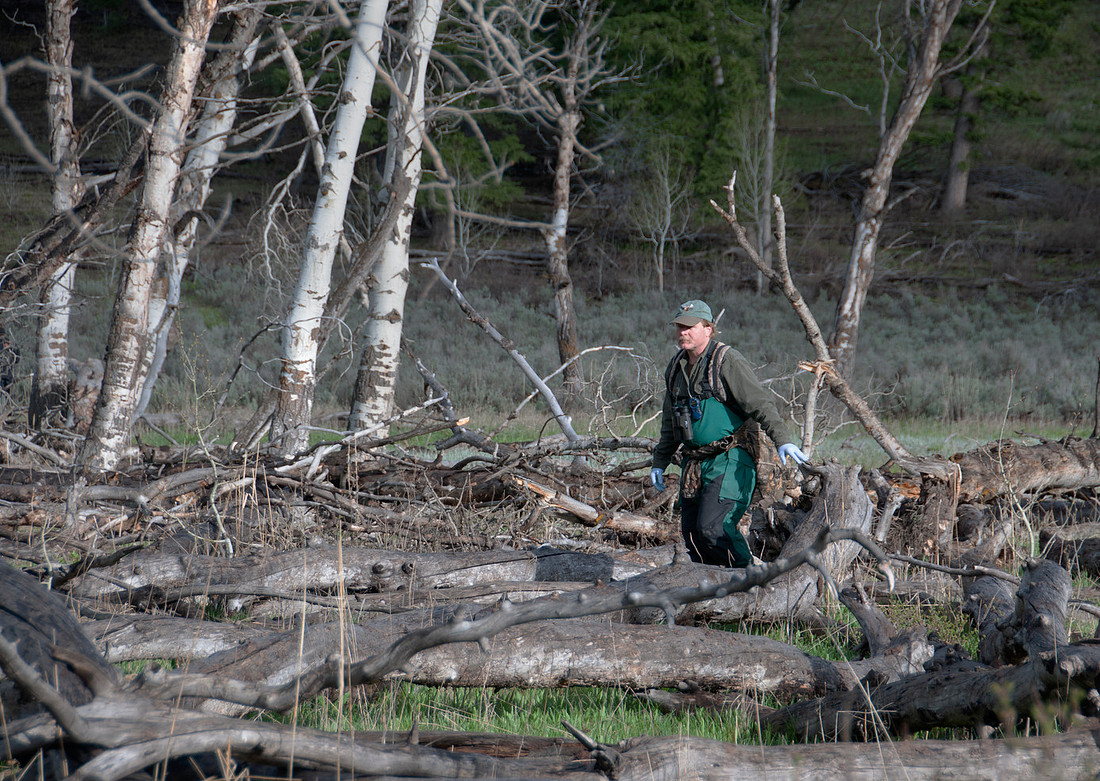
Or behind any log,
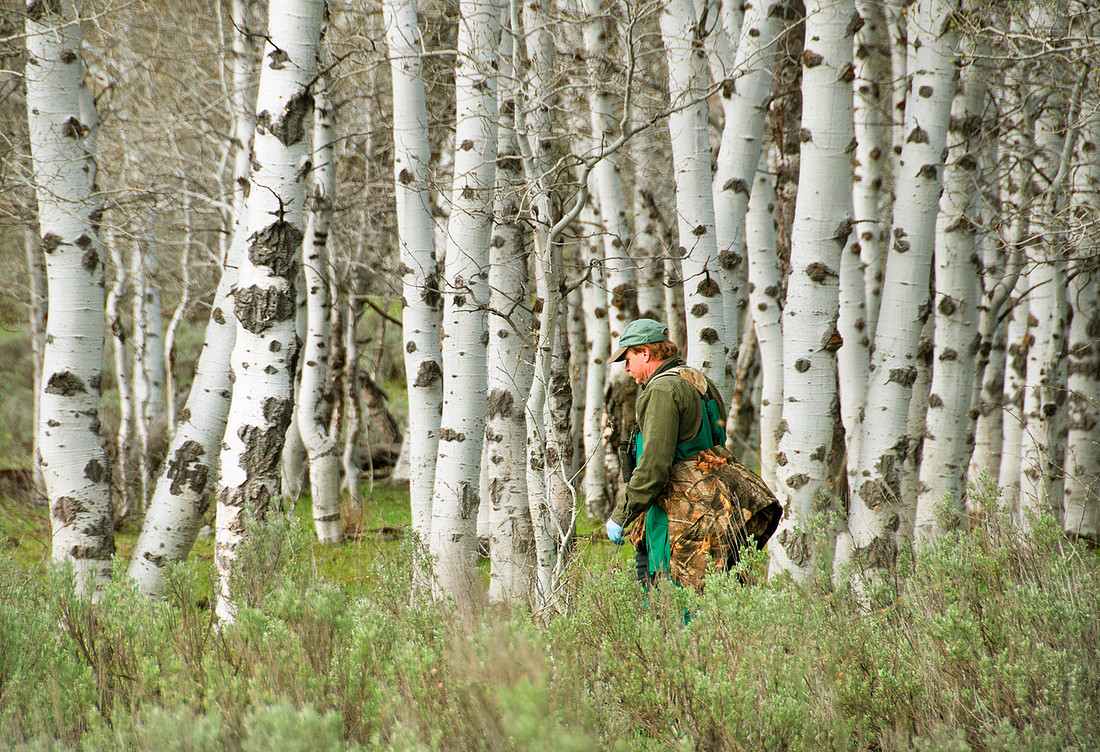
or anywhere in any stand of trees!!
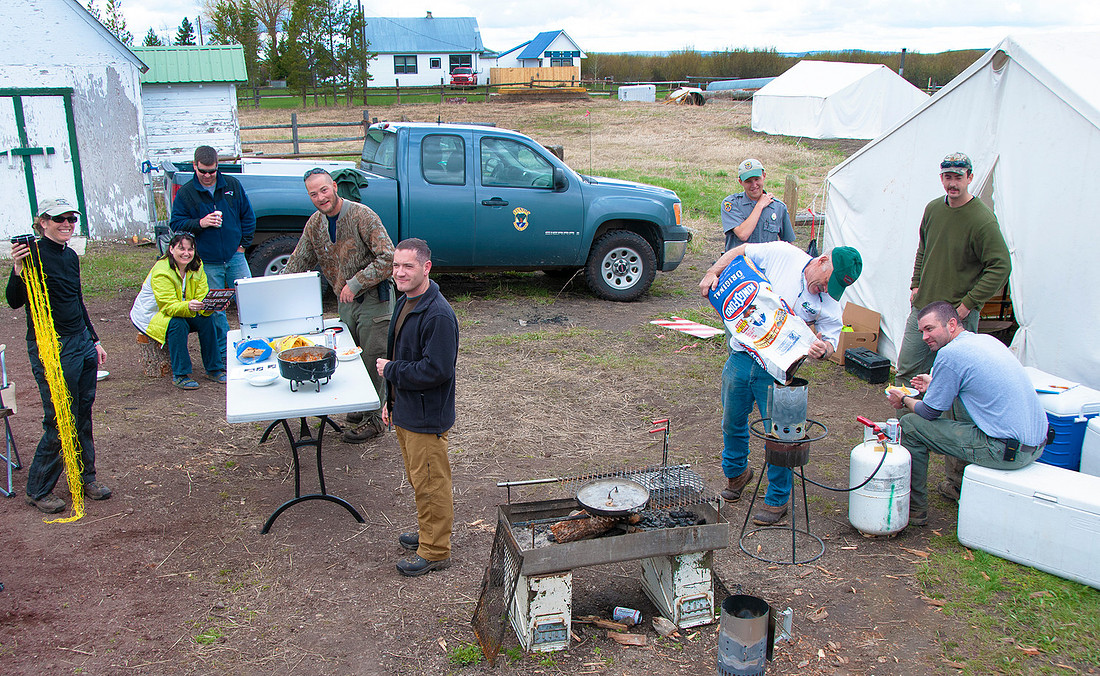
The biologists had learned that the mid-day hours were very unproductive so they would gather back at the camp. Lunch was the big meal of the day followed by hours of catching up on notes, paperwork and personal hygiene.
In the evenings the cows returned to the areas where their calves were hidden, so it was back in the trucks and back out in habitat.
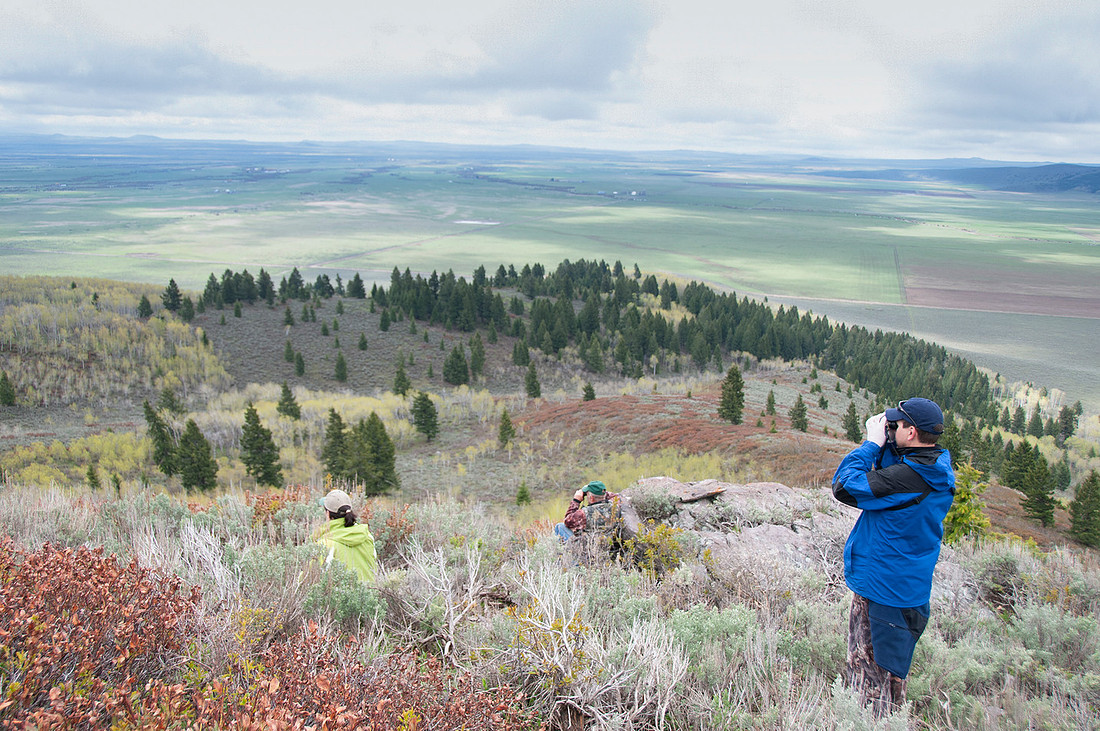
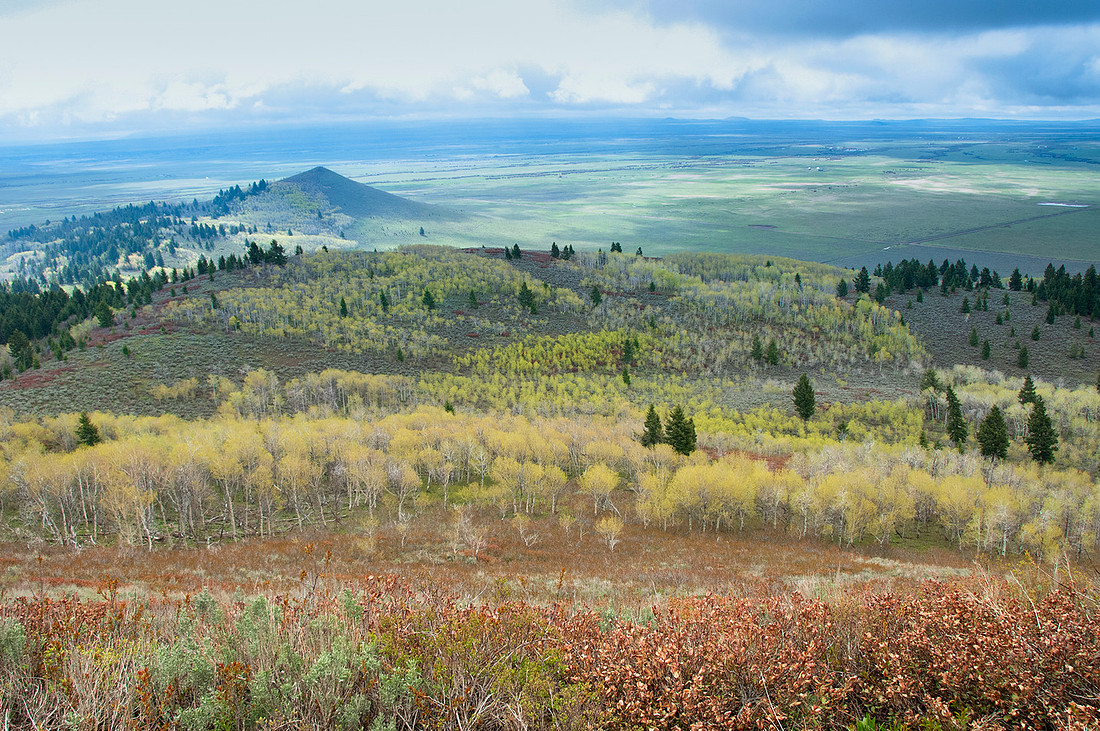
The trucks are 4WDrive, but they are never driven off the road. It is easy to see from this viewpoint that getting up to the search area is a long, uphill effort. This afternoon we saw a young moose, a small herd of pronghorn antelope, scattered mule and white-tailed deer, but very few elk.
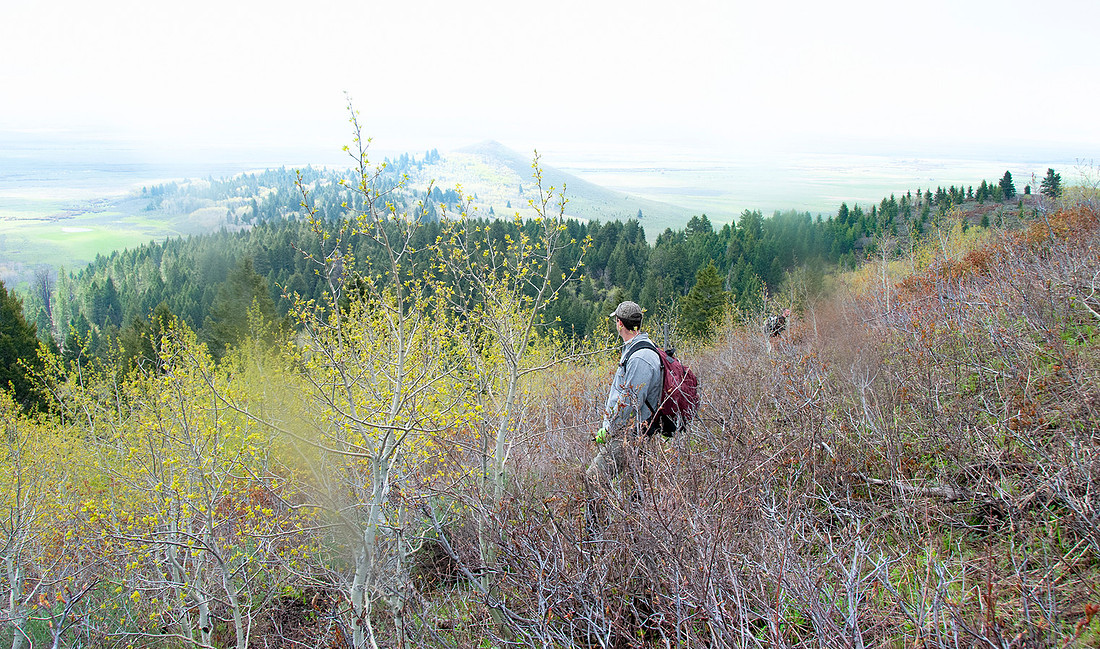
The few that were seen were cause for extended searches, all to no avail.
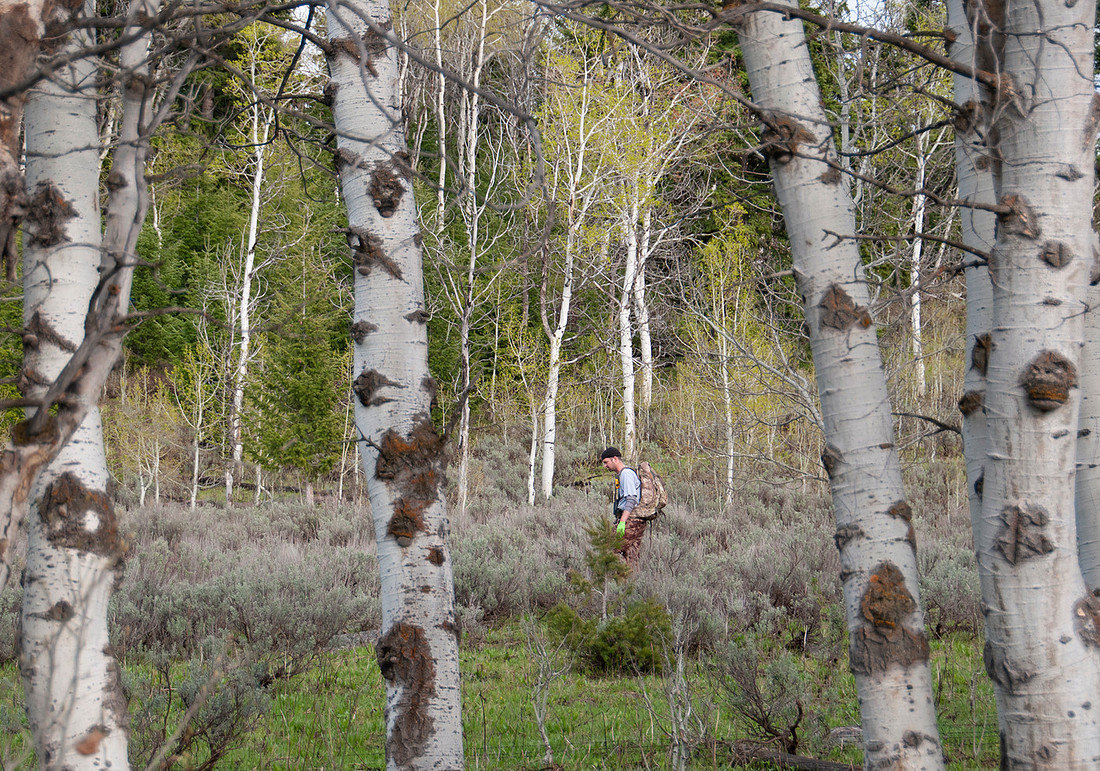
"Search and ye shall find" ... but maybe not exactly in the condition you are looking for.
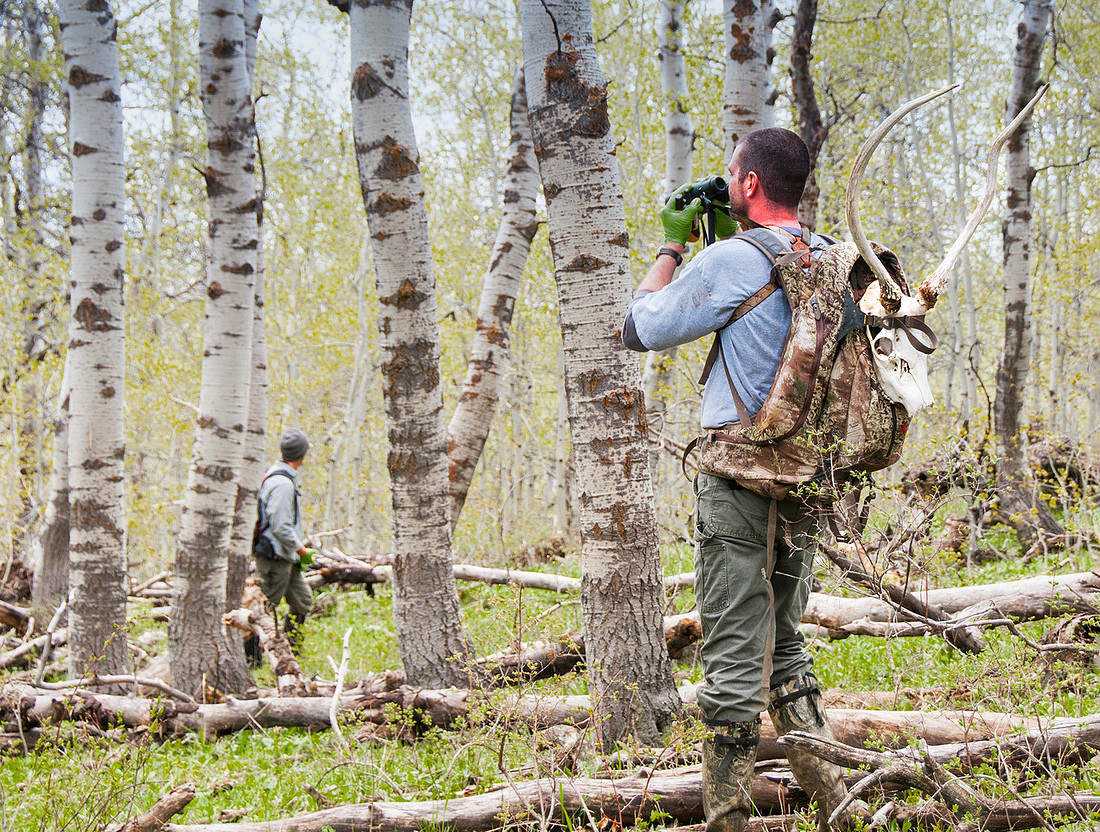
The talk around the campfire that night was a bit more serious. All of the teams had been skunked and the cow spottings were sparse. The elk calf hunt was in the name of science, but it was not a science. The processes used to find the calves were developed through trial and error. The biologists had only one prior years experience hunting calves, so there was a definite “seat-of-the-pants” feel to the effort. Shane knew there was only enough money to fund the project for two years, so this hunt was the last chance to gather data on which to base elk management in the area. He had to do something to keep the level of enthusiasm in the camp at a high level.
A new strategy was hatched. The team knew that nearly every cow elk in the area was pregnant, or had very recently given birth. Instead of breaking into teams and searching several areas at once, we would take the entire group to an area where the greatest number of cow elk had been sighted. If there are lots of cows in an area, there should be lots of calves. For the first 24 to 48 hours after they are born, the calves are totally defenseless. Their hooves are still soft and they do not have the strength or balance to run from danger, so they must remain well hidden. We would search the area in a concentrated fashion similar to looking for a lost child or a dead body. But survival requires that defenses come quickly. Calves as little as two days old are quick to jump out of hiding and take off running. Once able to run, the calves are nearly impossible for a human in hiking boots to chase down. If the element of surprise is lost, it’s game over.
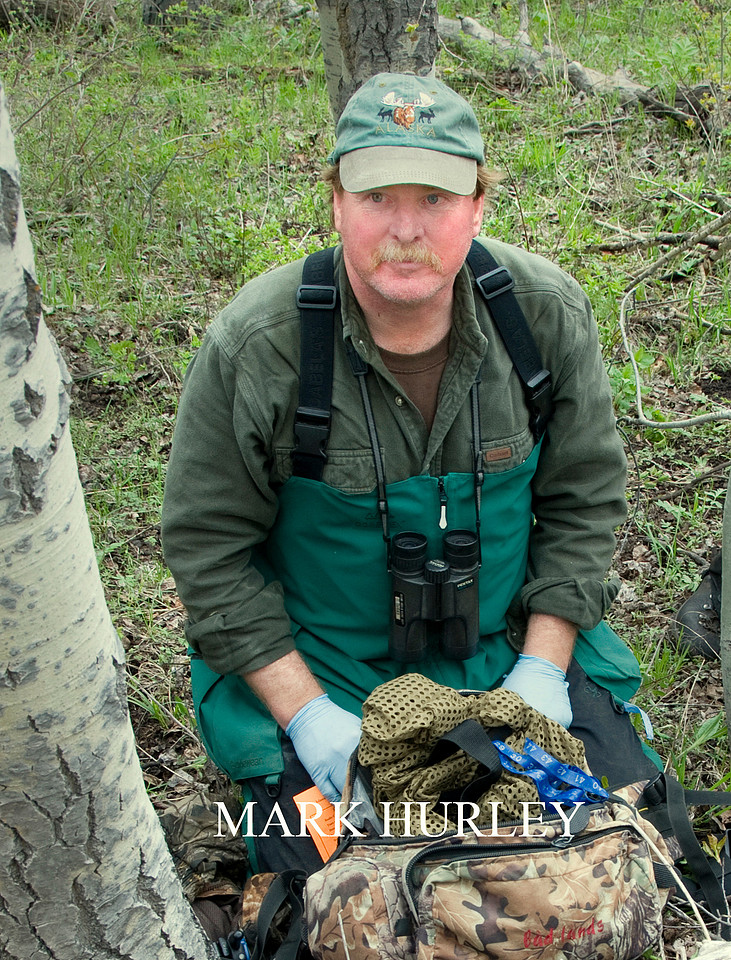
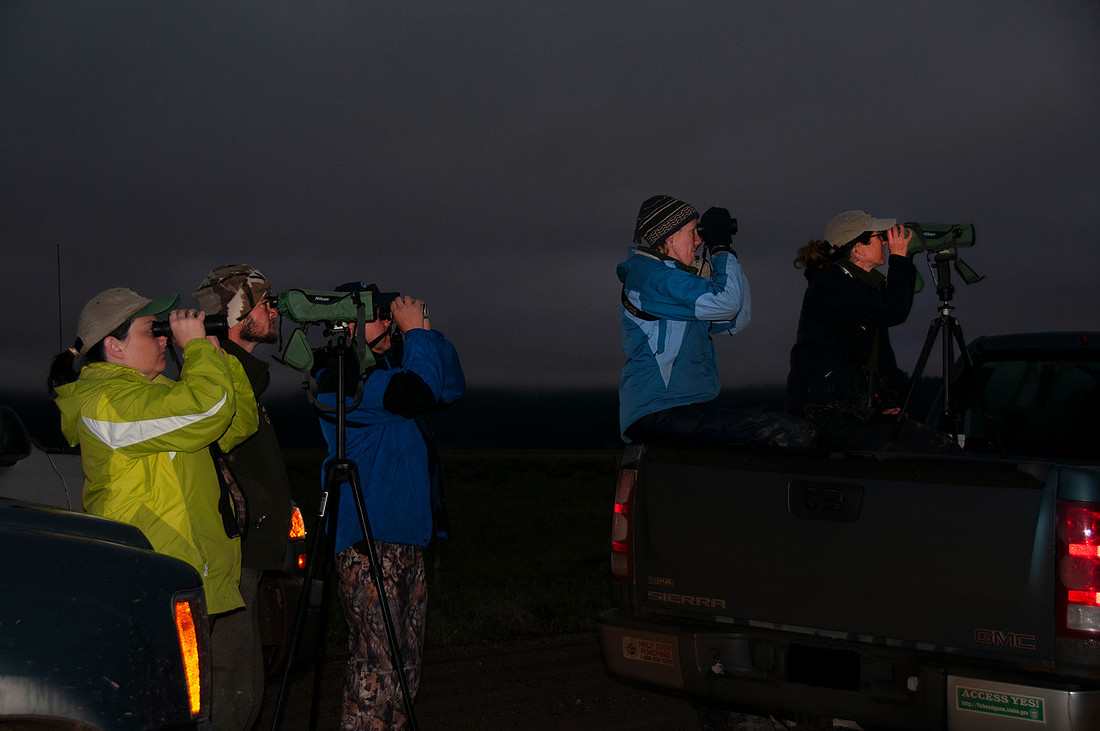 Long before first light, approximately 20 searchers were lined up on the roads surrounding a group of large, heavily foliated hills. All eyes were straining through binoculars and spotting scopes, watching for any glimpses of cows. Cow elk protect the defenseless calves from predators by hiding them. They visit their newborn calves hiding spot multiple times a day for nursing, but stay far enough away most of the time, including nightime hours, to avoid drawing attention to the hiding spot. Although feeding can occur at any time, cows usually feed and re-hide their calves in early morning and late evening. The best way for the biologists to find the calves is to be out in habitat at dawn, the time of the morning feeding. We initiated a stealth mode search in an area where several cow elk had been sighted. The new strategy paid quick dividends. We were less than 15 minutes into the search and had just spread out along a stream at the base of the first hill when biologist Mark Hurley froze in his tracks. His arms went straight up in the air, the agreed upon silent signal that a calf had been spotted. Mark waited only seconds for others to see and react to his signal before he coiled and leaped on the startled calf.
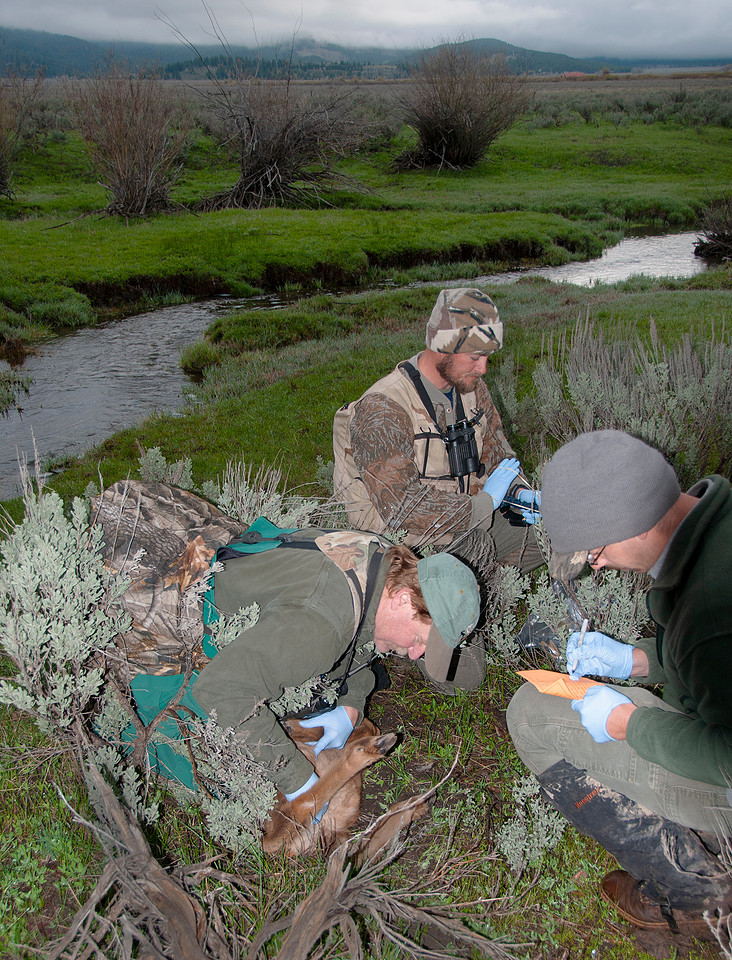
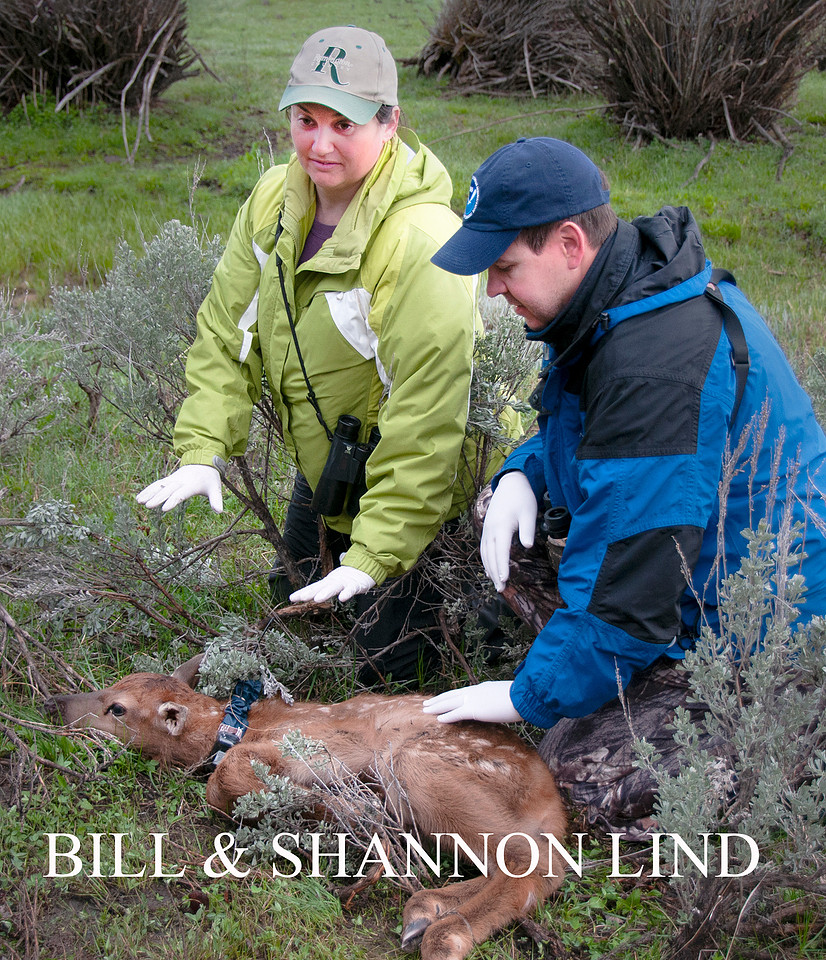
All of the biologists wear rubber gloves to minimize coating the calf with human scent.
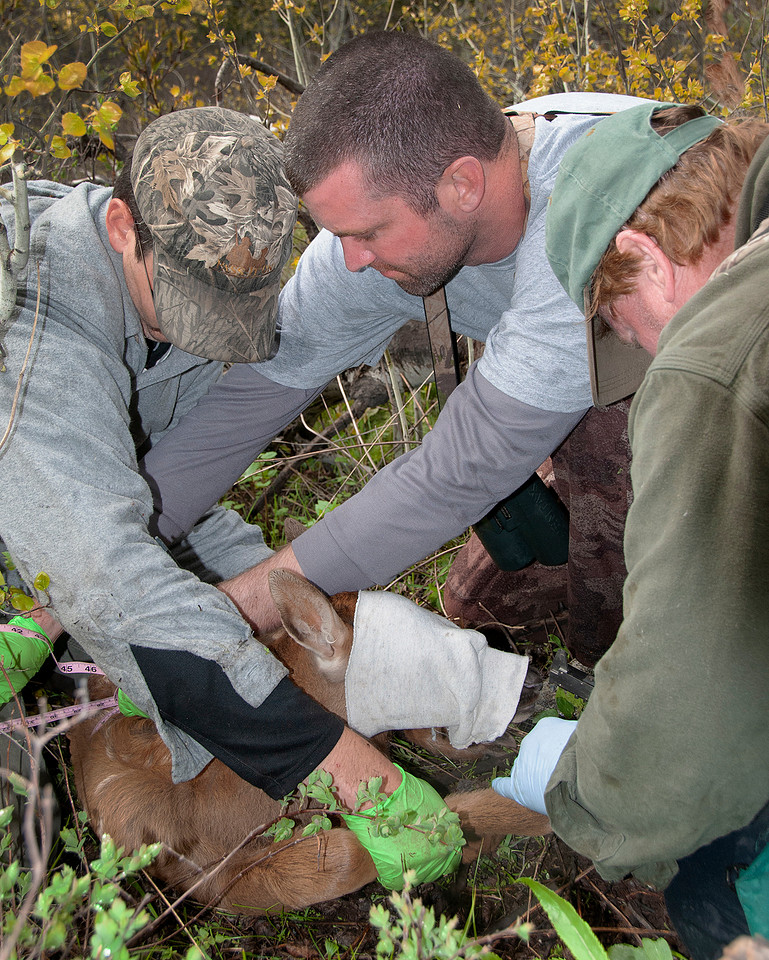
Once captured the calf is blindfolded. The biologists quickly measure total physical size.
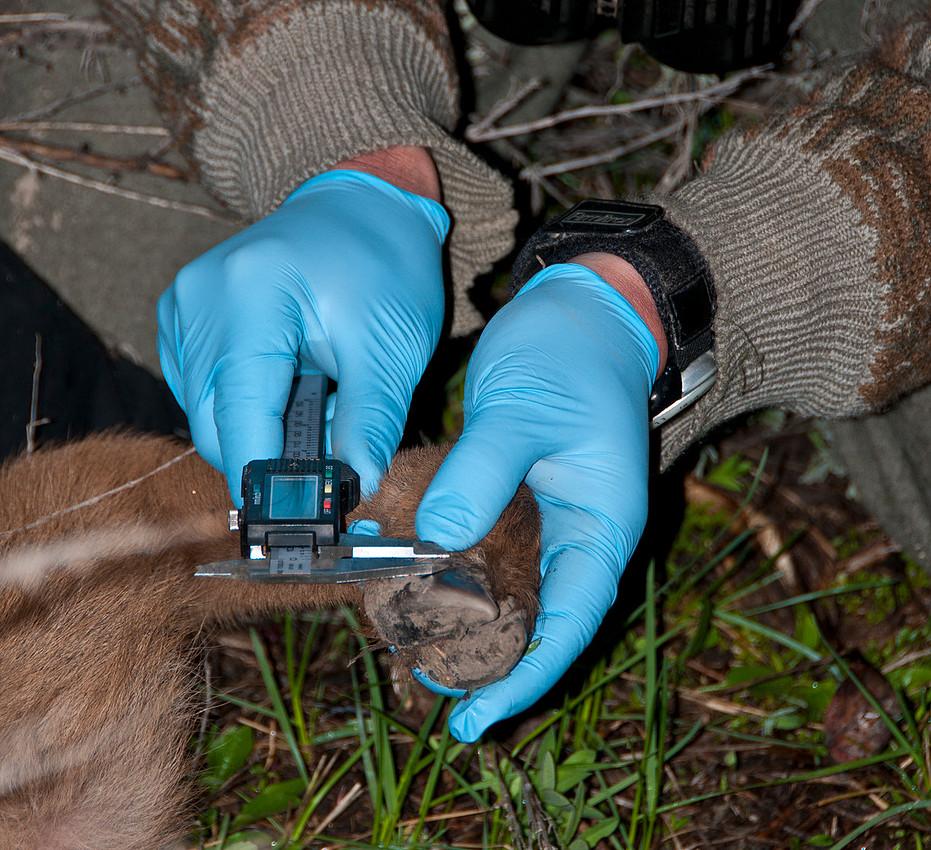
Newborn calves must develop rapidly if they are going to survive. At birth, elk hooves are too soft to walk on, but they harden in about 48 hours. Detailed measurements help biologists understand this process.
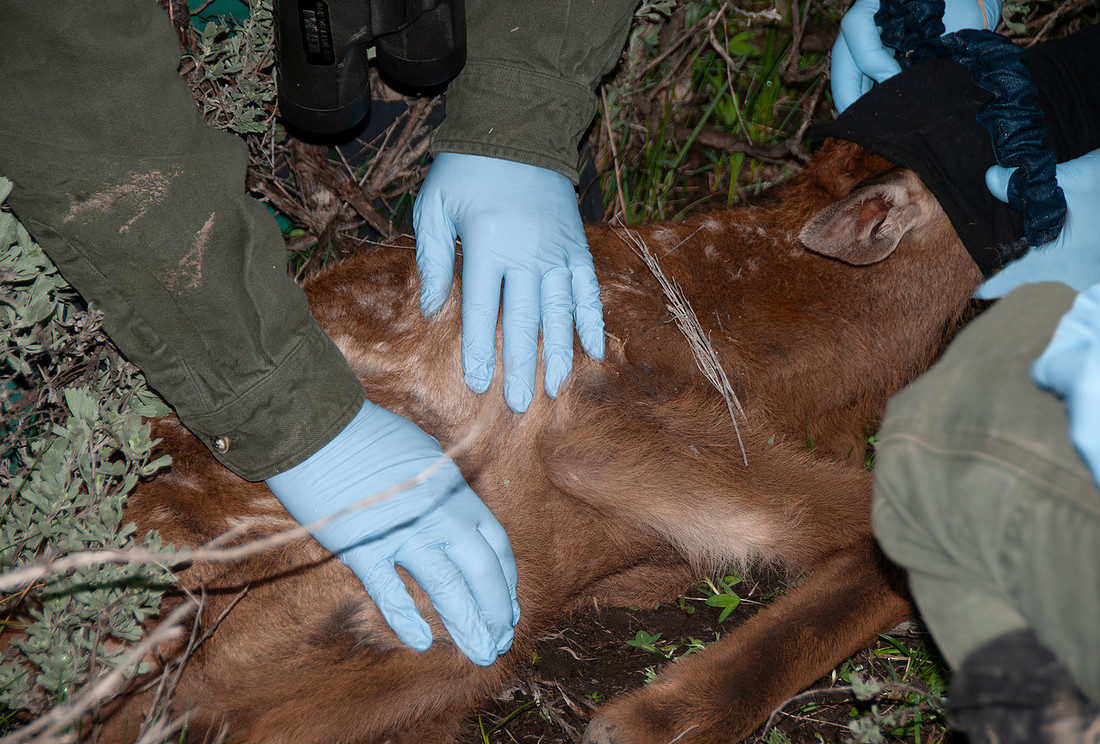 sex is checked and recorded.
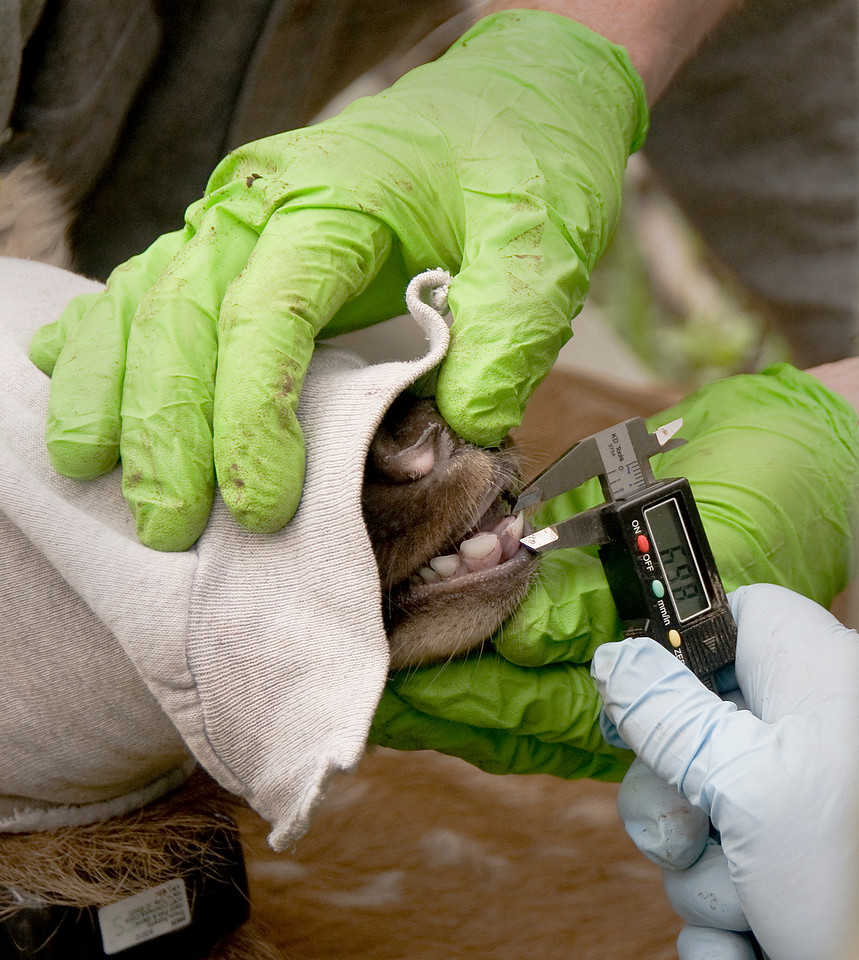 tooth growth and weight are measured.
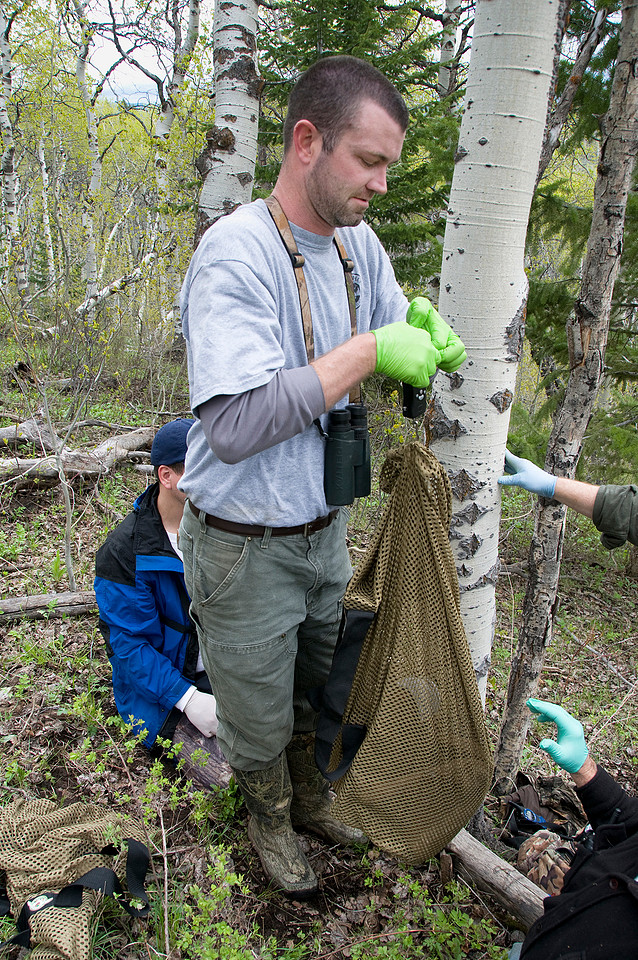 Biologists weigh each and every calf. Newborns often weigh less than 50 lbs. but can add 10 or more pounds per day.
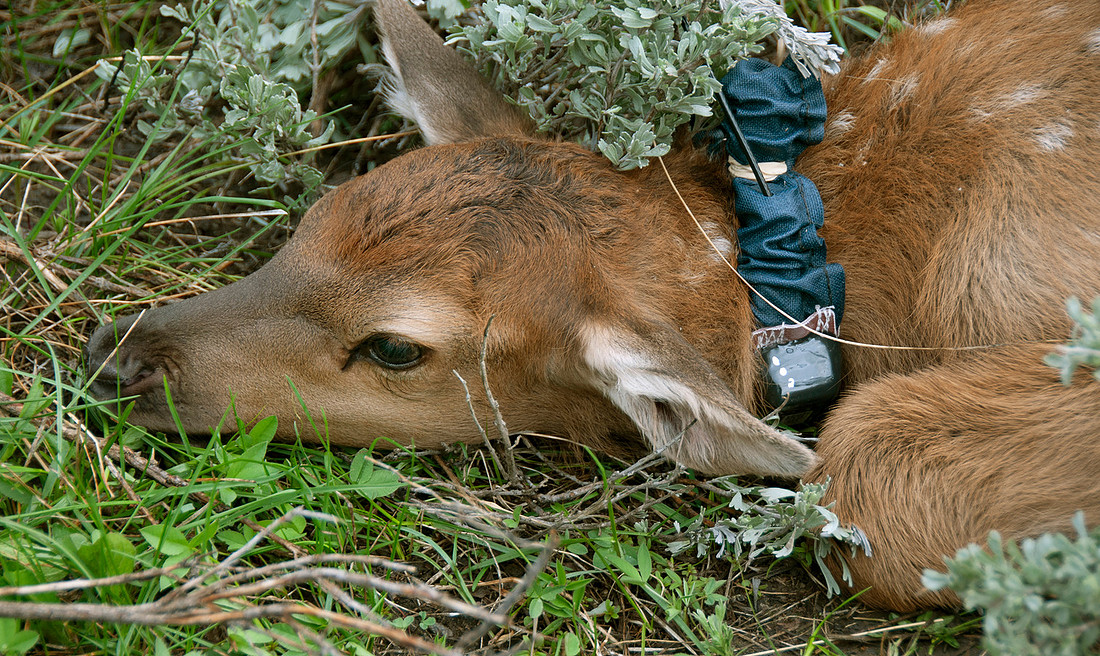
The tracking collar is slipped over the calf’s head. The biologists only need to know the calf’s whereabouts during the coming fall and winter, so the collars are designed to expand as the calf grows and then fall off after one year. The first calf is estimated to be less than 48 hours old. When the blindfold is removed the calf does not even try to run away so the biologists curl it back into a semi-fetal position and return it to it’s hiding spot. We leave the area greatly encouraged about the prospects for the days hunt. The terrain is so rugged and heavily foliated that some of the searchers get split off from the main group and are not seen again until lunch time at camp. The group I am with captures 5 more calves in widely varying terrain. The biologists must work under difficult conditions. They do not move the calf from its’ hiding place in dense underbrush while they gather the needed data.
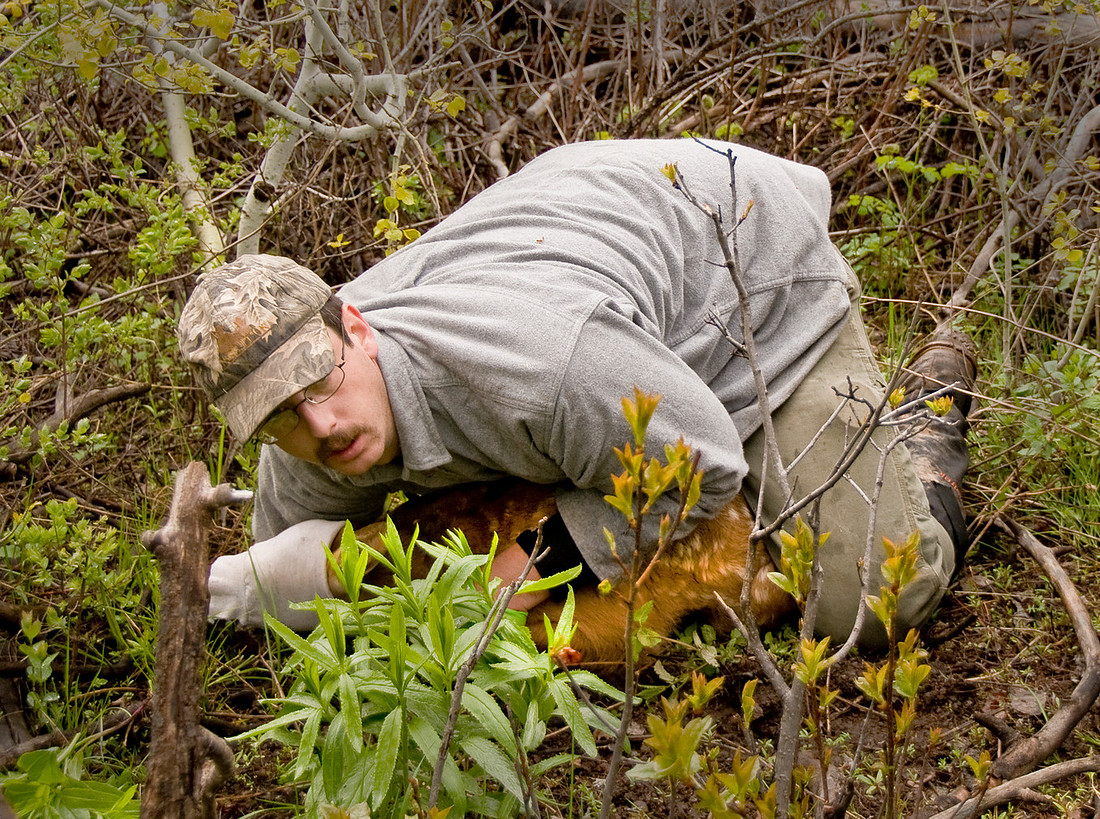
The basic process is always the same. Capture....
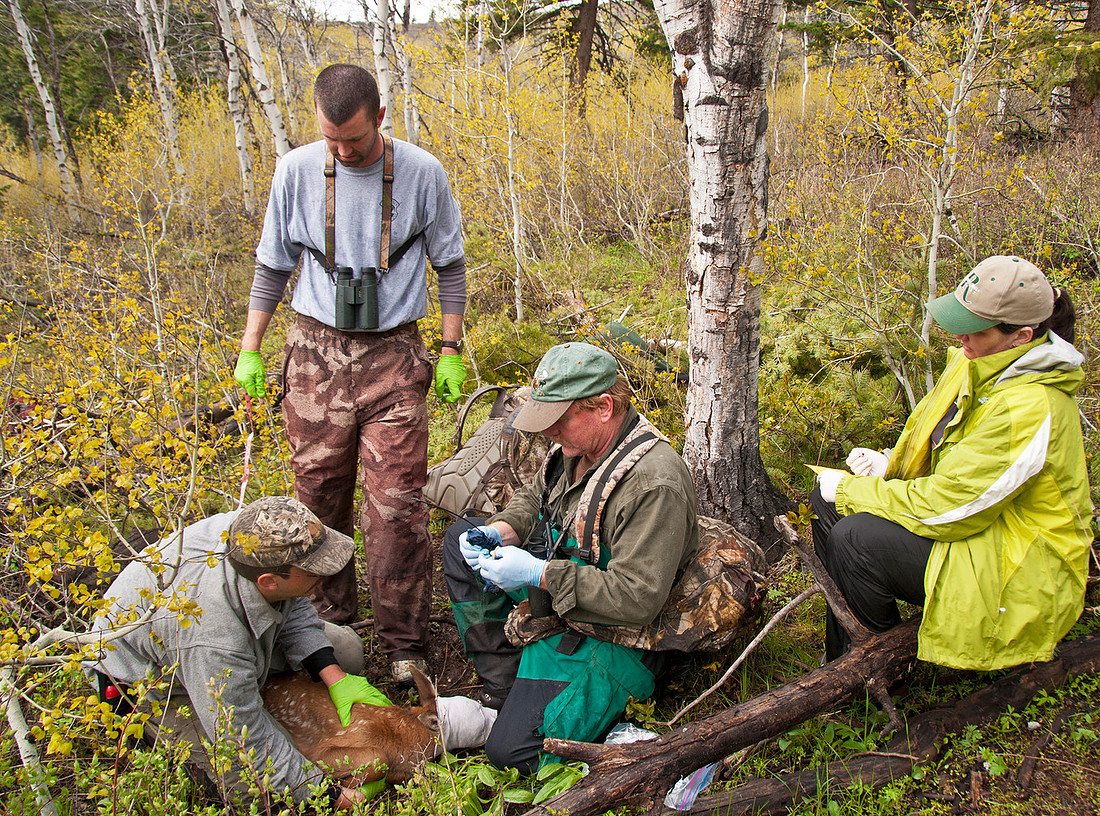 measure, measure, measure....
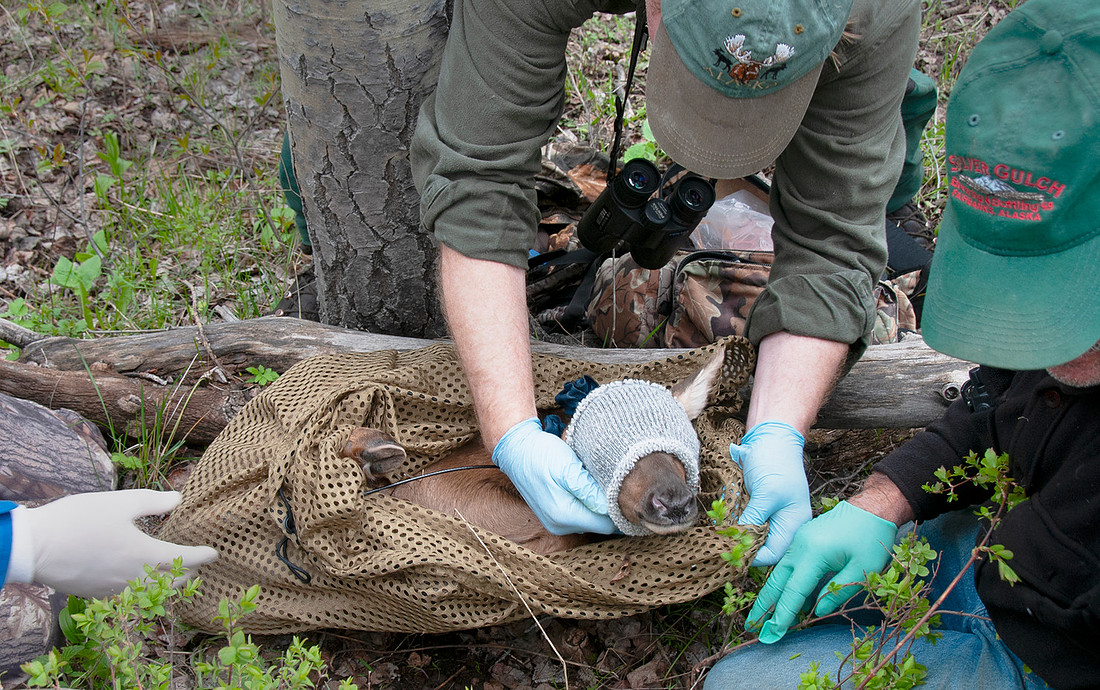
blindfold, collar and weigh. Most of the biologists carry pocket size digital cameras, so photos are taken.
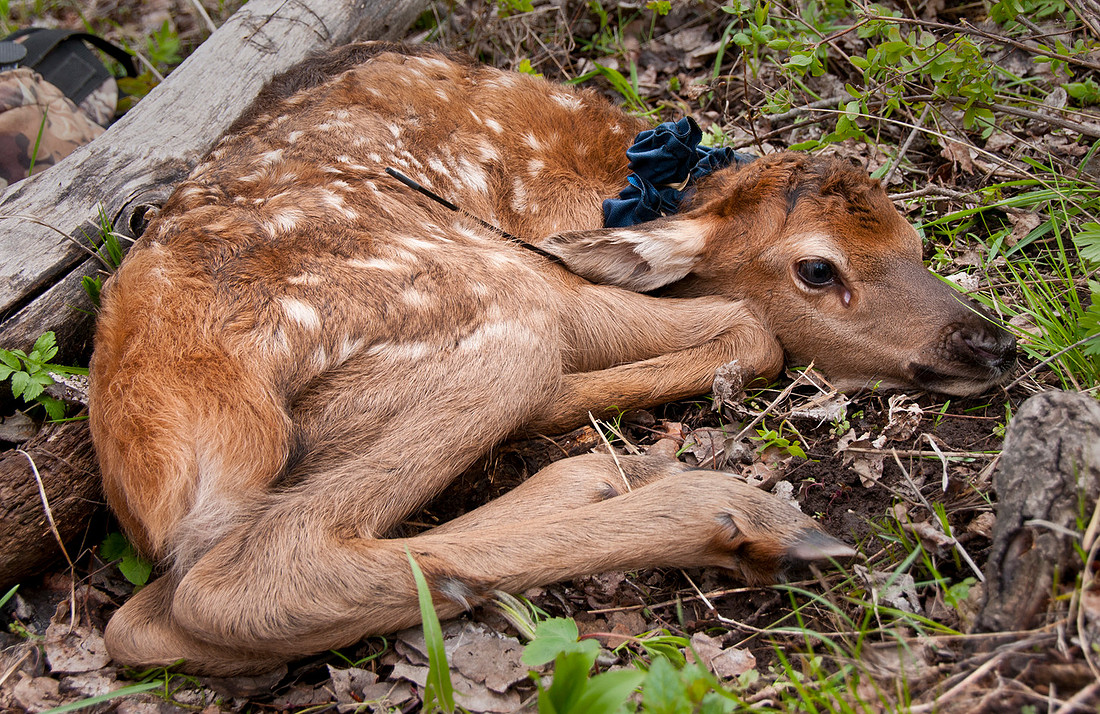
Almost all of the calves captured were replaced where they were found.
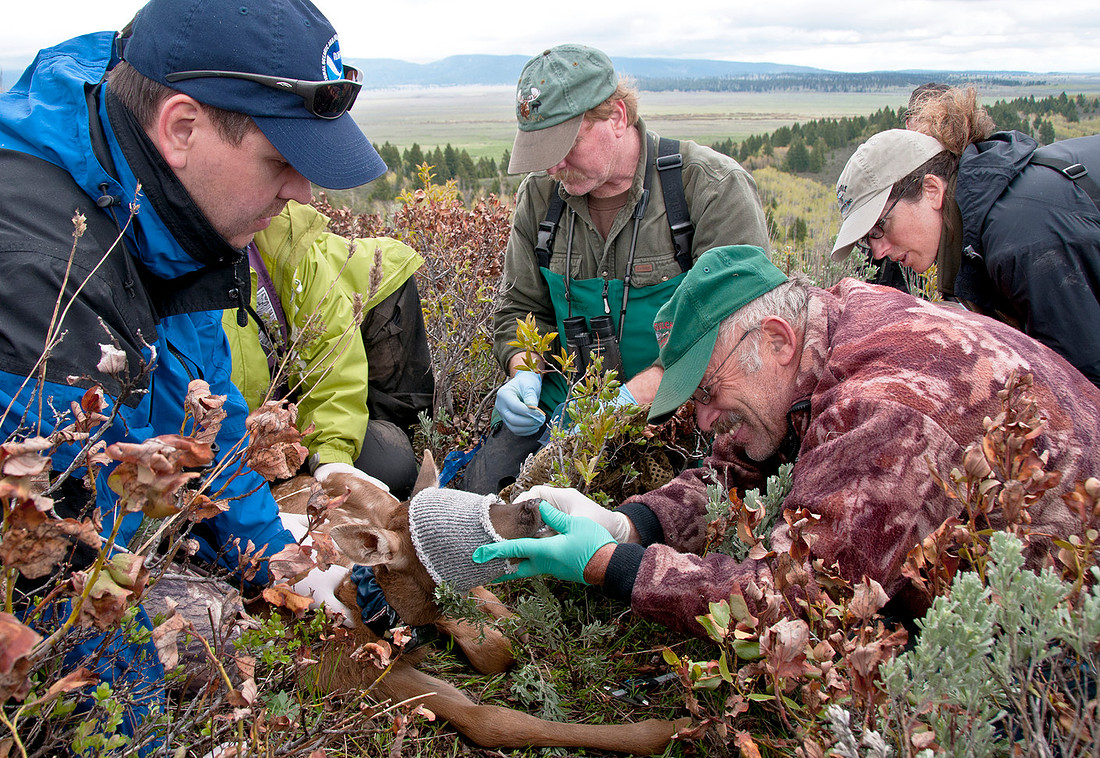 One calf is located at the very top of the largest hill in heavy brush
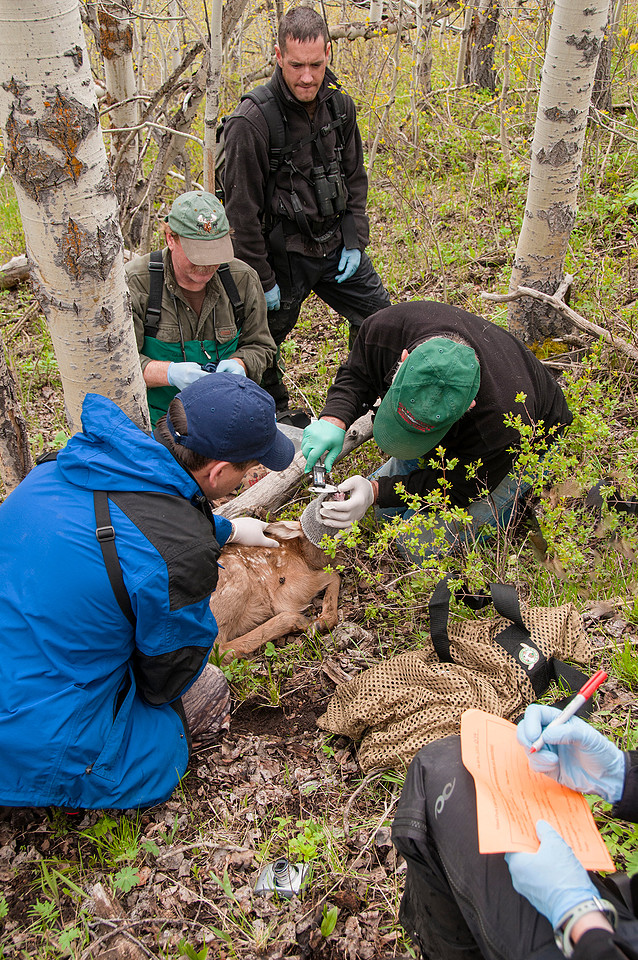
two others are hidden in heavy timber on the steep side of the hill. Two are old enough to run away after their blindfolds are removed. Buoyed by success, Shane pushes the morning hunt well into the early afternoon. By the time we get back to camp we have been hunting elk calves for over 8 straight hours.
Capturing and collaring the calves is only one step in the process. Follow-up teams go back to capture areas with a radio telemetry receiver to determine if the collars are working. There are three main possibilities. The best is a strong, slow beeping signal indicating the collar is working well and the calf is moving around. The worst is no signal, which could indicate a faulty collar, or one that has been completely destroyed. The biologists hate that because they don’t have any way to find out what caused the failure and have no way to avoid similar future problems. The collars are designed to change the rate of the transmission “beep” from slow to fast if they sit motionless for four consecutive hours. This is the third possibility and it requires still another step in the process. The biologists call this a “mort” signal, referring to mortality and can mean that the collar fell off, or was pulled off by the cow or shrubbery. It can also mean the calf was found by a predator and killed.
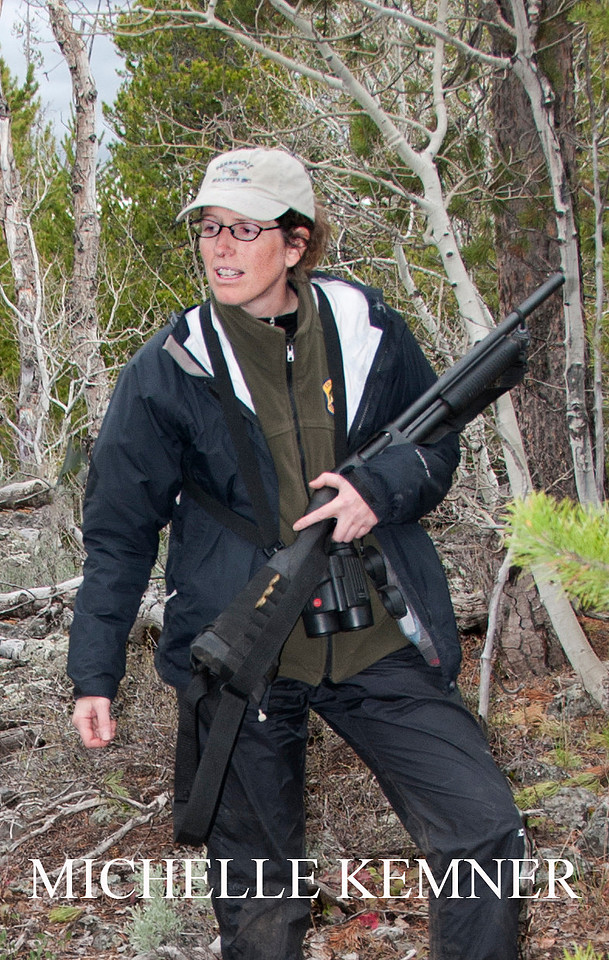
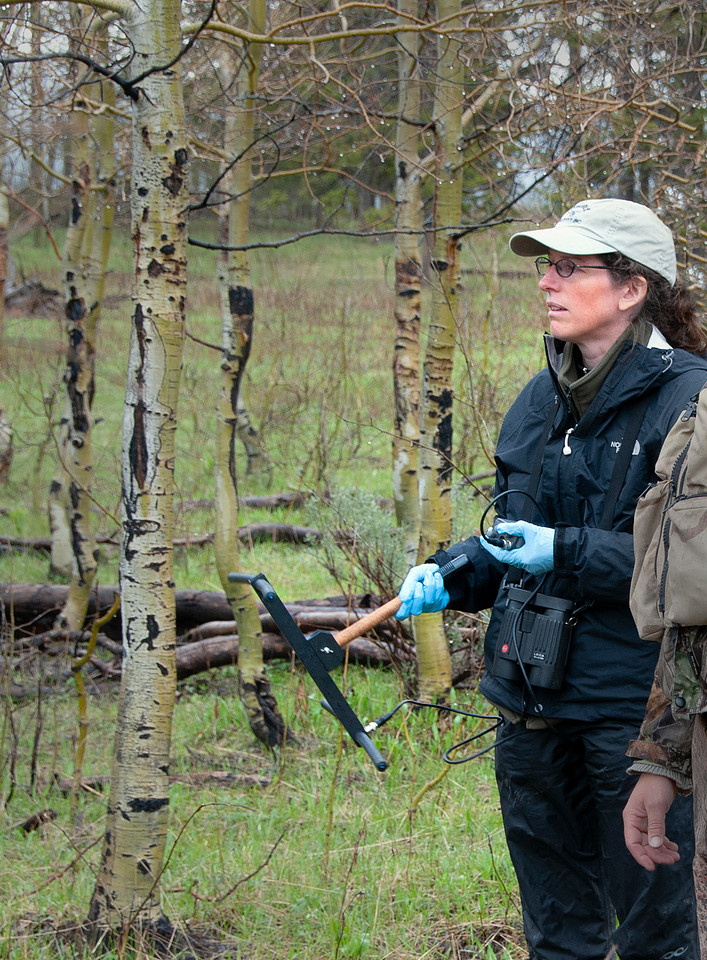 Ian and Michelle decide to forego the afternoon break and initiate a mortality search. I get myself invited to go along. There have been no predator issues during the search process, but this time we take a 12 gauge shotgun. Following the first mort signal takes us deep in the wilderness to the very end of a 2-track trail. Now we must continue on foot. Michelle chambers a round of buckshot followed by two 12 gauge slugs. The biologists hope that if there is an encounter with a predator the buckshot will scare it away. The slugs are for any predator that is not easily persuaded and initiates an attack. We all double check our pepper spray and set off tracking the mort signal. The search for live calves is done in total stealth mode. The search for mort collars is the exact opposite. Michelle is singing out, “Hello bear, here we come.” We are all talking loudly and tromping through the underbrush. Experience has taught the biologists that predators don’t always eat the entire calf at one sitting. Often they consume it over a period of days. Tracking down a mort collar could lead the biologists directly to a feeding predator.
This is not a birthday party and no one wants a surprise.
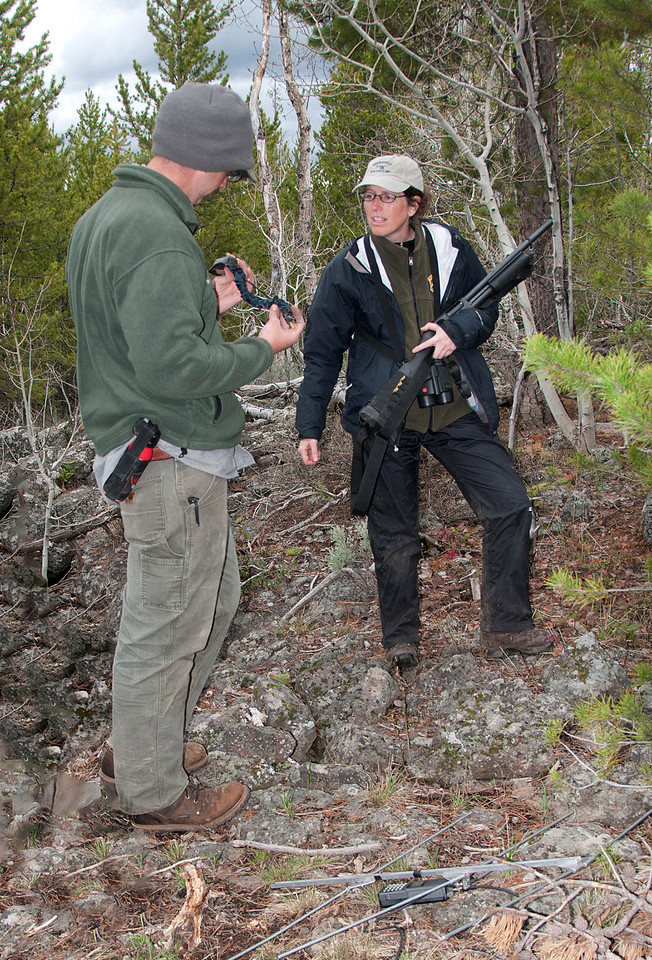 Radio signals travel in a straight line but we must triangulate our way around trees and rocks trying to pinpoint the collar. Finally we arrive at a large rock outcropping with criss-crossing crevasses and several caverns. “It has to be here somewhere.” declares Ian. There is no blood on the collar when we finally locate it. No signs of struggle. But the collar is intact. It wasn’t broken off or damaged so questions remain.
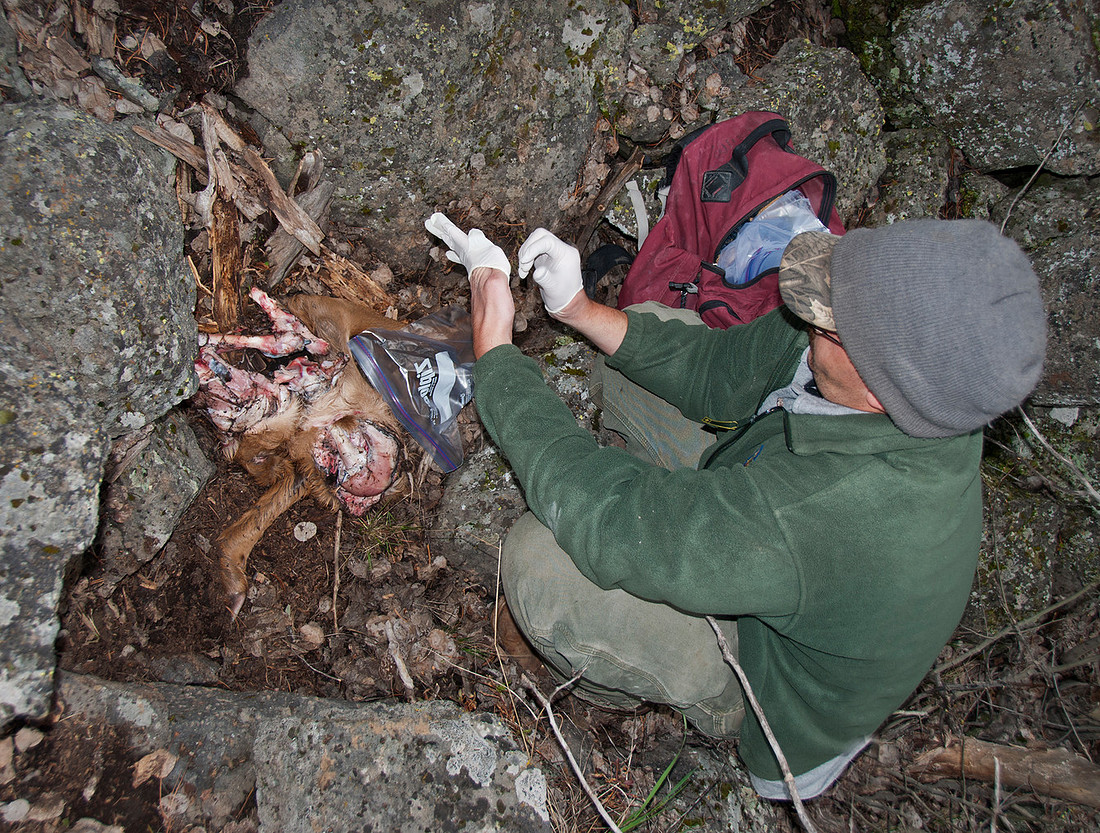 We continue to scour the area until Ian calls out, “Here it is”. There was very little calf left. The scraps of bone and flesh were very similar to the leg bones I saw in the back of the truck bed my first night in camp. I thought the discovery of the collar and remains meant we were done, but this is the point where Ian and Michelle switch into CSI-Wilderness mode. They want to know what killed this calf. We search for tracks, fresh scat, teeth marks, anything that would provide a clue. Ian finds one hair near the elk remains that is too long to be from the carcass. The two biologists examine the hair but cannot decide if it is black bear or grizzly. They place it in a plastic bag for the lab. If one species of predator is taking too many elk in a specific area, the Fish and Game department may authorize a special hunt to even out the fight.
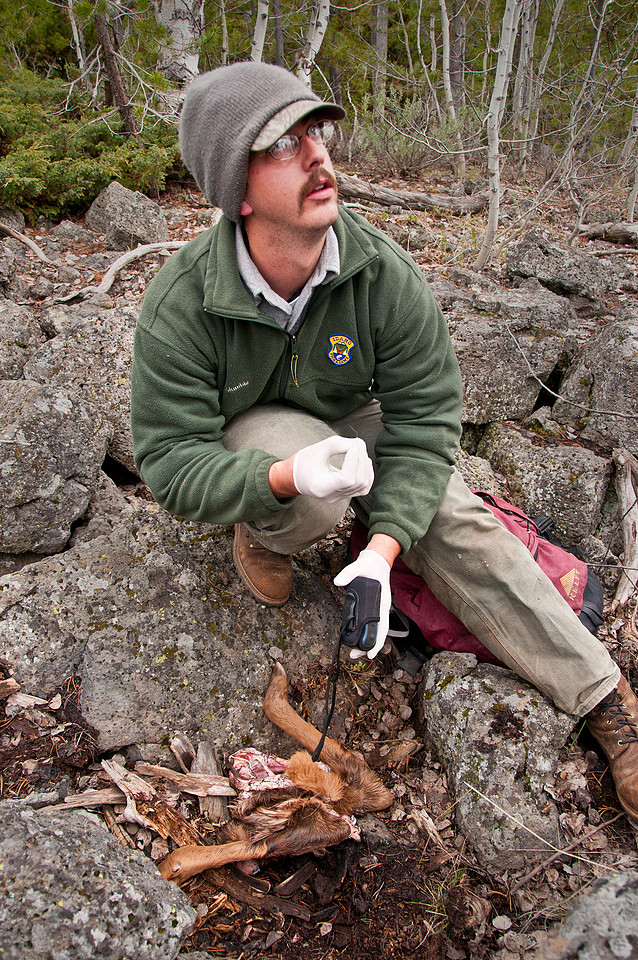
Ian picks up the few remains that are left and we are headed back to the truck. OK, but where is the truck. The telemetry receiver had led us in circles trying to locate the collar and carcass. Now it was useless for the return trip. We had failed to GPS the truck location when we started the search. Now we had to search for our ride out of the wilderness. More singing. More tromping. But ultimately success and we are headed for the next mort collar location. There is a lesson to be learned here!
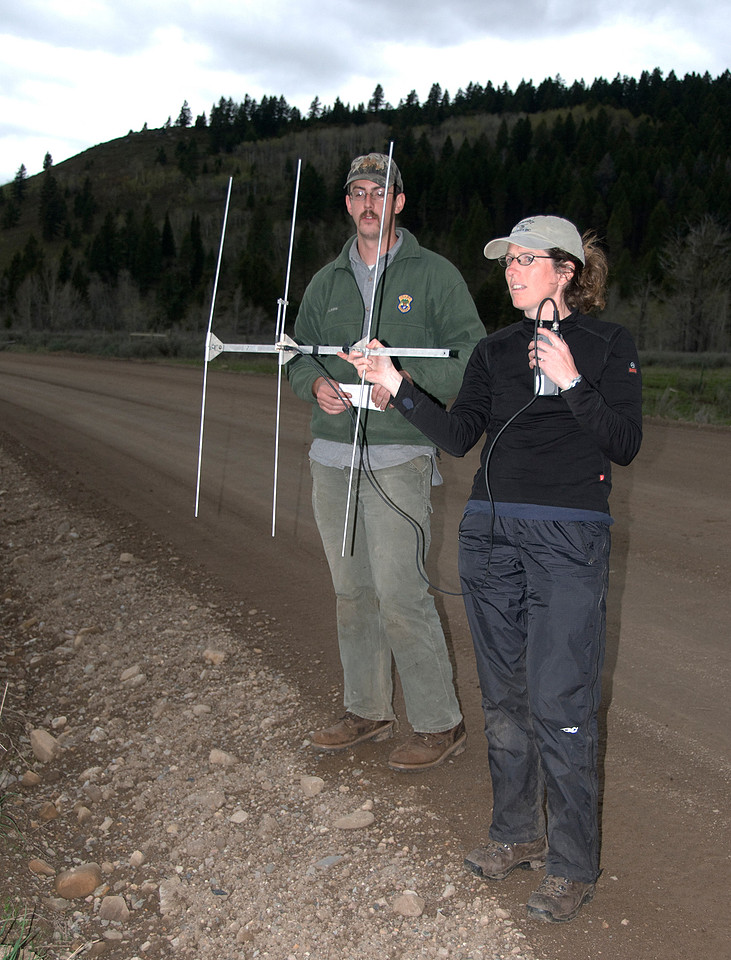
A very strong mort signal tells us the second collar should be a piece of cake. We are on a gravel road next to a large, flat marshland used for grazing cattle. The collar should be somewhere out in this pasture, probably hanging on one of the barbed wire fences. No tromping. No singing. No surprises. We follow the signal across a half mile of marshland to the base of a rocky ridgeline. No collar! Now it is past sunset and starting to get dark. This flat marsh we just crossed is where biologist Trent Brown had photographed three wolves only two days earlier. The last carcass we found may have been eaten by a bear. We left the shotgun in the truck. Decision time.
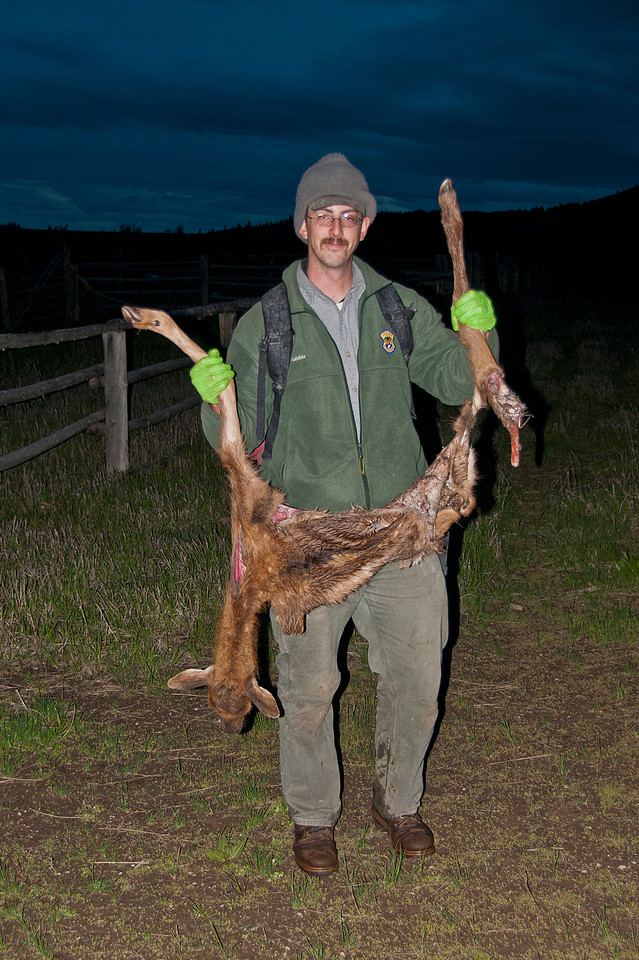
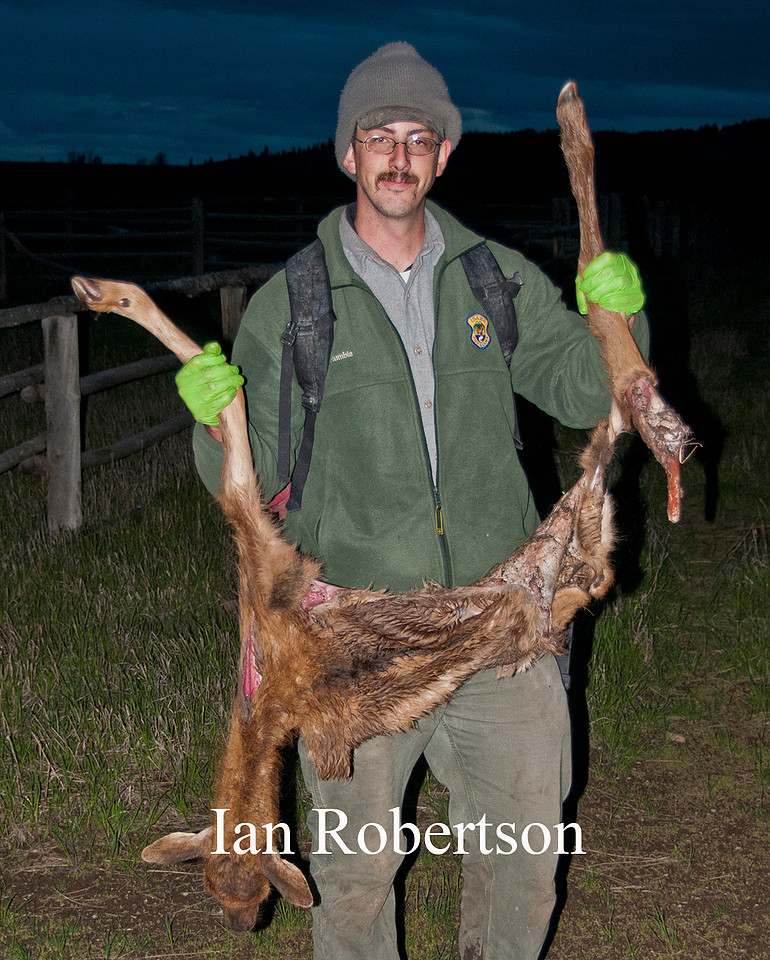
For the biologists it was a no-brainer. Ian and Michelle start the climb up the hill. It’s getting dark so a photographer would be of little value and I would probably slow them down. I waited at the base of the hill and watched them in case they found something before going out of sight. They got to the first ridge line and disappeared into the woods. I sloshed back to the truck. Back on the road, I scanned the ridge line until it was too dark to see anything. Occasionally I would point my camera across the marsh and trigger the flash in case they needed a reference to where the truck was. Soon I heard voices and eventually could make out the pair crossing the marsh. Ian was carrying something.
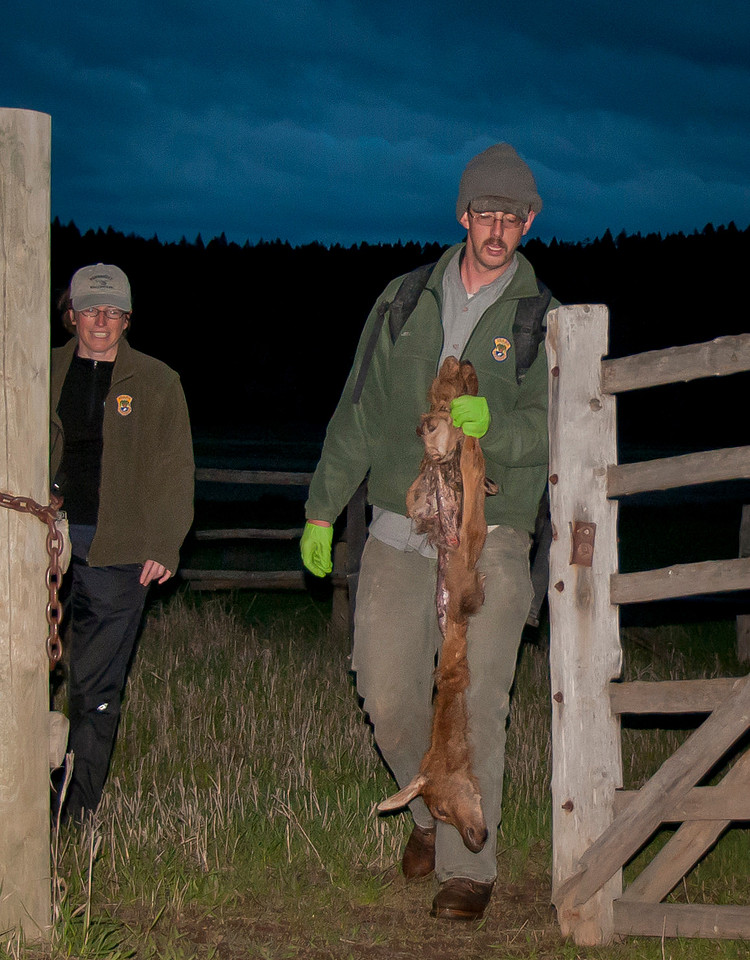
Predators have signatures. One bear signature is that they seldom eat the skin, or hide, of their prey. Other predators, wolves for example, eat everything. What Ian was carrying is what the biologists describe as a “bear skinned rug”. This elk carcass had skin intact from the head to the hind legs, but all the flesh and bone in between was gone. The biologists had found this carcass very close to the collar, but the rocky ledge provided no clues to what had actually killed the elk.
Our discoveries and tales of the search were a big hit around the campfire that night. We had avoided a direct encounter with a major predator this time, but everyone was very aware that we were trespassing in their domain. I got a sense that, even though we had lost two more of the hard won collars, the biologists felt there was a reasonable balance between predators and prey in the area. Less than 20% of the prior year’s collars had been lost to predators during the year. Shane felt that was a remarkably high survival rate, considering the suite of large predators in the area.
The Kilgore team eventually captured and collared 42 calves. While not the 50 they had hoped for, it was an improvement over the prior year. About13 of those calves died or lost their collars. Three others are known bear predation, one coyote predation, one fence mortality and 2 unknown mortalities. Six of the calves shed their collars, several likely caused by barbed wire fences. The movements and survival of the remaining calves was monitored and used to give the team valuable information on which to base recommendations for elk hunting limits. I gained great respect for what these people do.
WHO'S WHO?
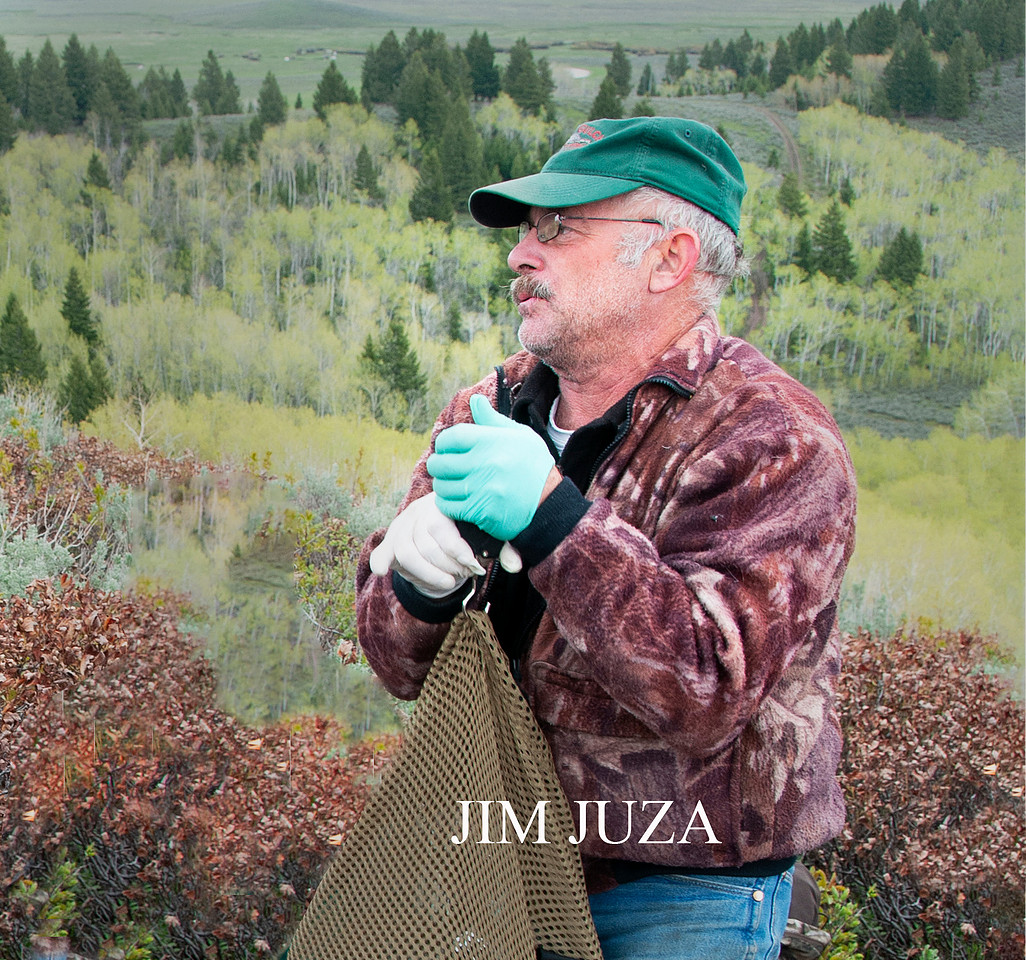
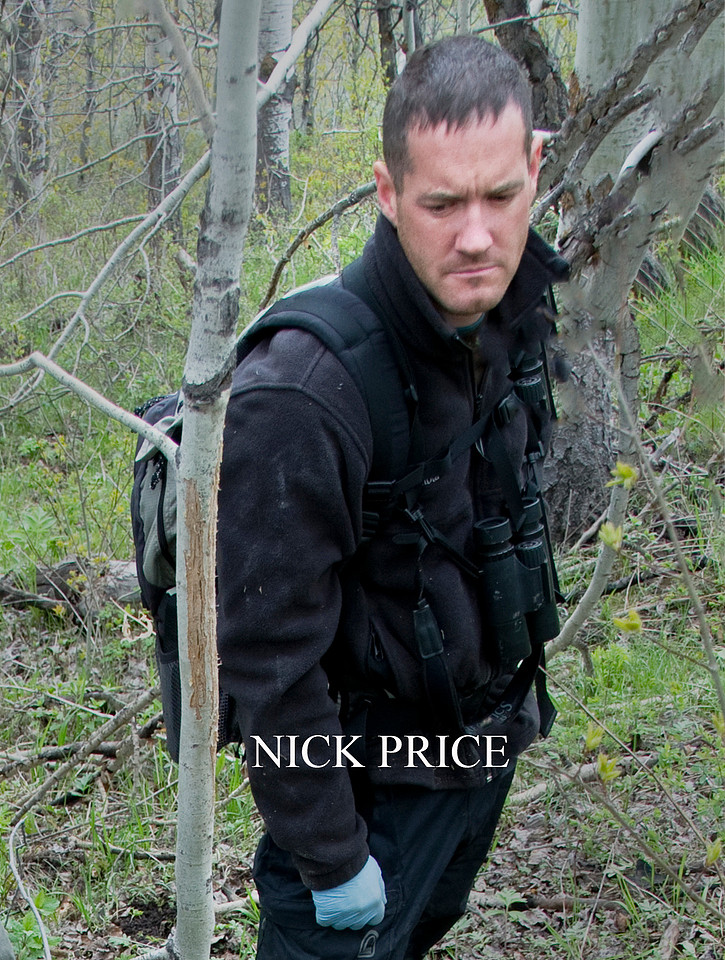
The camp operated for approximately 3 weeks. It was populated by a core crew of biologists headed by the project manager Shane Roberts, but the crew would grow and shrink on a daily basis depending on the number of area biologists who could get permission to leave their regular duties to help hunt the elk calves. There would be many, because “We don’t often get a chance to do fun stuff like this elk capture project” Michele stated. I only got to spend two days in the field on this project, so there are lots of people who were involved who are not represented here. But, here are the folks I had the pleasure to search with.
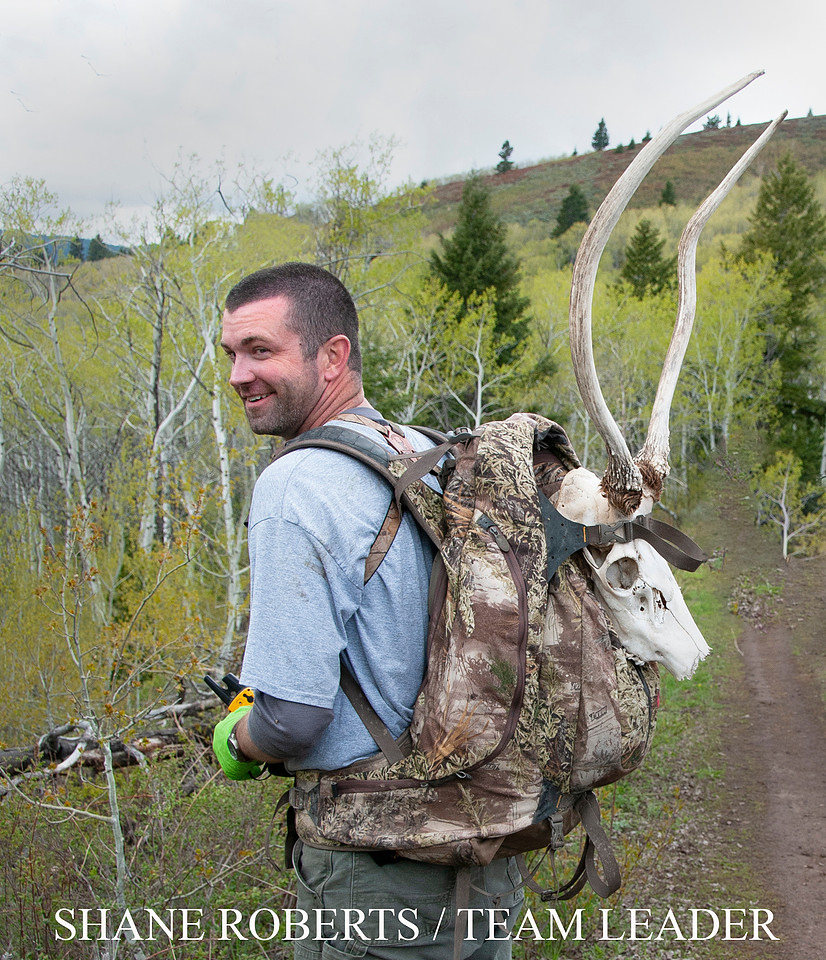
And here is my gift from one of them.